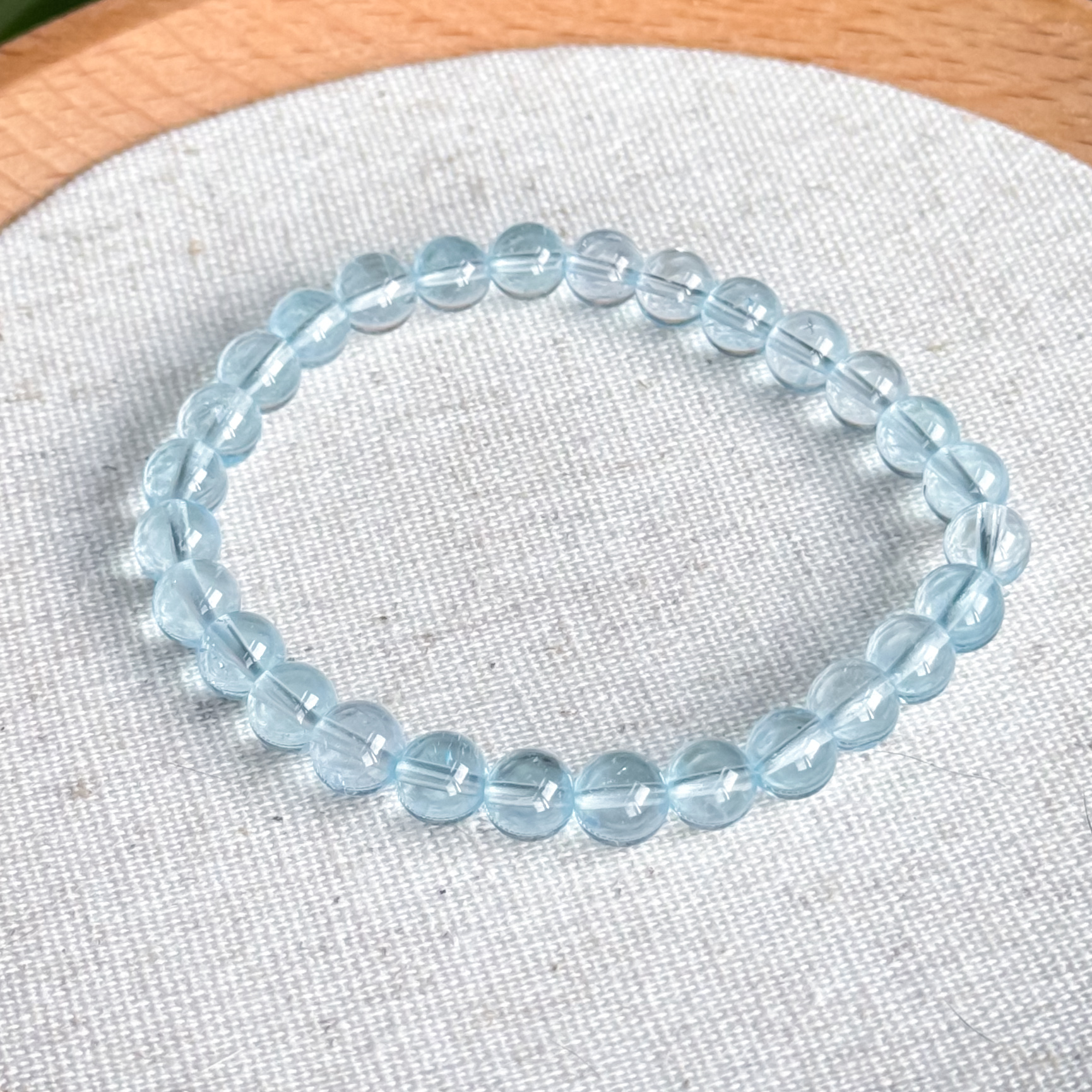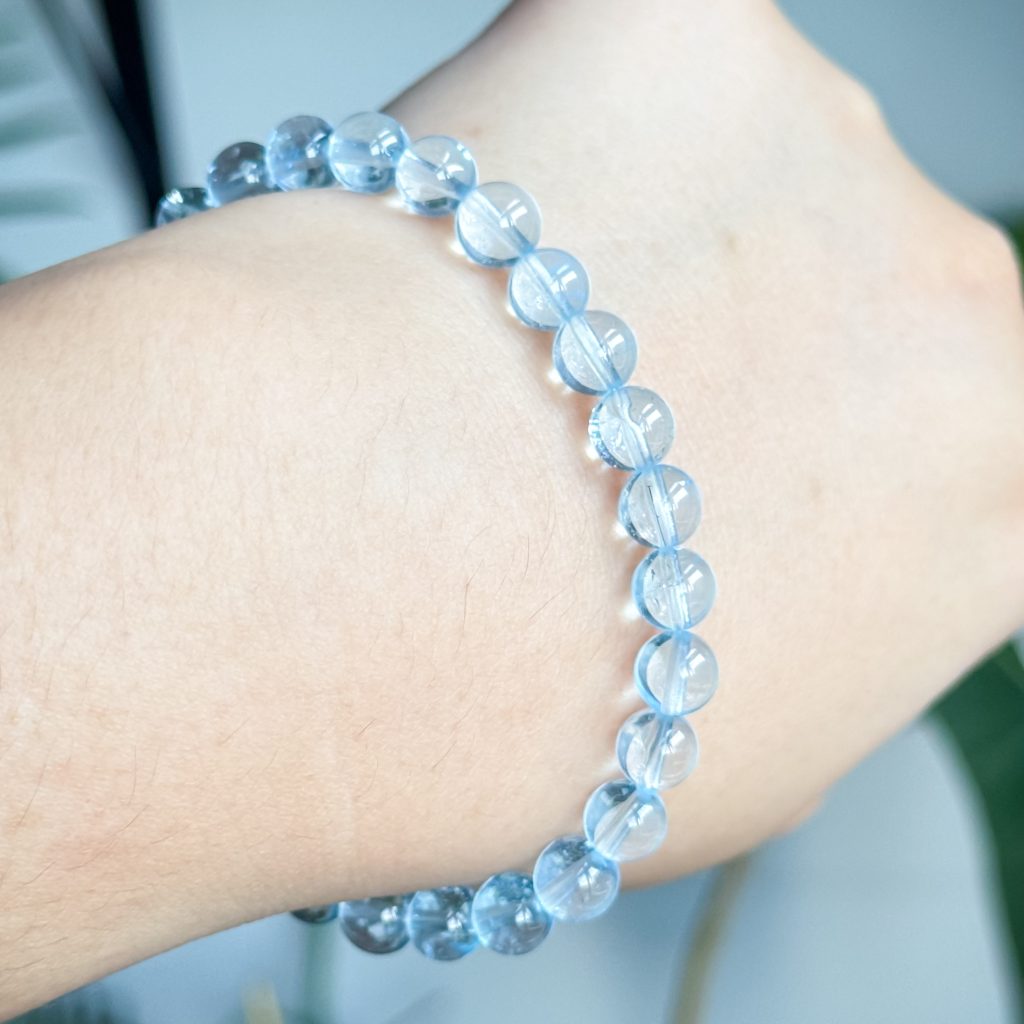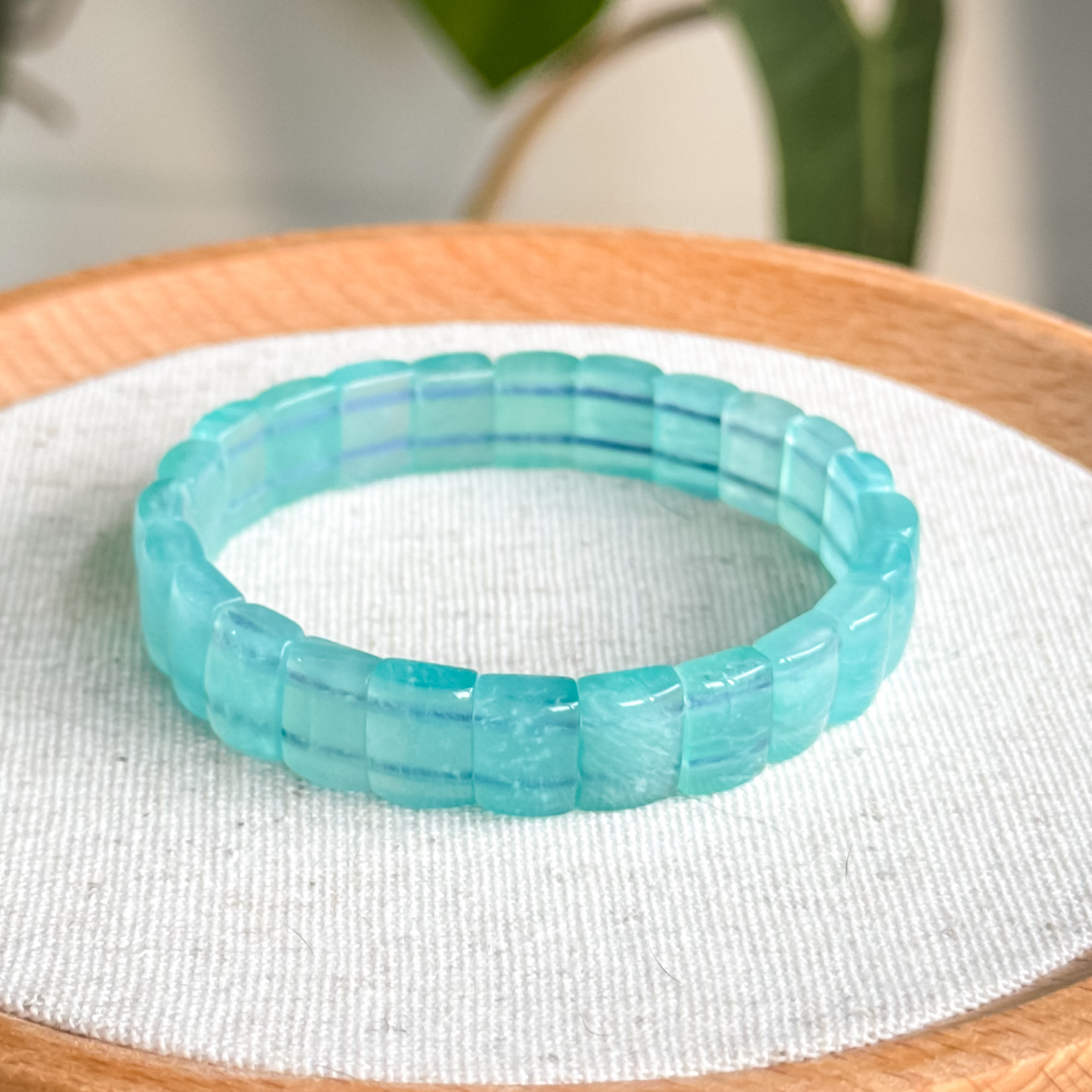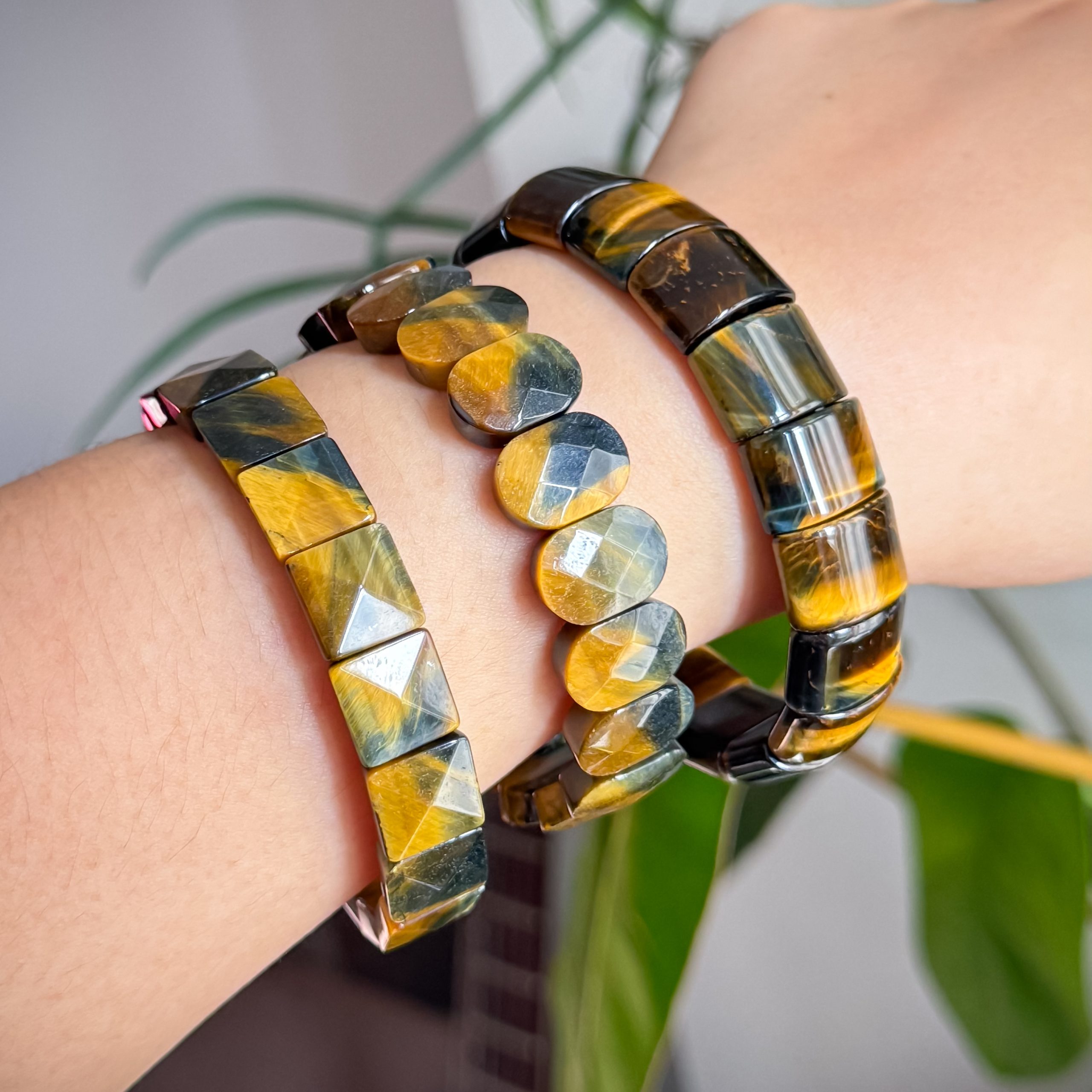
The hard, many-colored solar gem of will, manifestation, and clear truthful voice
Topaz is one of the few gemstones that defines a level on the Mohs hardness scale, comes in essentially the full color spectrum, and has been known since antiquity yet remains affordable across most of its varieties. The mineral name has a tangled history — the ‘Topazios’ island of classical sources (modern Zabargad in the Red Sea) actually produced peridot, not topaz, and many gems historically called ‘topaz’ (including ‘smoky topaz’ and ‘Madeira topaz’) were actually quartz varieties. The trade name confusion was only fully cleaned up in the late 19th and 20th centuries. Mineralogy and quality factors follow GIA. Historical claims follow gemological literature; metaphysical claims follow the crystal book library.
|
Mineral family |
Aluminum silicate fluoride hydroxide, Al₂SiO₄(F,OH)₂, in the orthorhombic crystal system. Mohs hardness is 8 — topaz defines level 8 on the Mohs scale, set by Friedrich Mohs himself. One direction of perfect basal cleavage is the catch behind that excellent hardness — topaz can split cleanly along this plane under sharp impact. Crystals are typically prismatic with characteristic vertical striations and pyramidal terminations. Topaz forms in pegmatites and high-temperature volcanic rhyolites. |
|
Color |
One of the most variably-colored major gemstones. Colorless when chemically pure; natural colors include yellow (sherry, champagne, golden), orange-red (‘Imperial topaz’ — the most prized natural color), pink (rare, chromium-bearing), brown (often unstable in sunlight), pale blue (rare in nature), green, and bicolor stones. Most commercial blue topaz on the market today (including ‘sky blue,’ ‘Swiss blue,’ and ‘London blue’) is produced by irradiating and heating colorless topaz. ‘Mystic topaz’ is colorless topaz with a thin-film surface coating that produces rainbow iridescence. |
|
Origin |
Brazil (Minas Gerais — the Ouro Preto district is the world’s main source of Imperial topaz; many other Brazilian deposits supply colorless and blue material), Russia (Ural Mountains — historic source of Russian ‘imperial’ pink topaz), Pakistan (Mardan/Katlang — rare natural pink topaz), Sri Lanka (Ceylon), Mexico, the United States (Texas — natural blue; Utah — sherry topaz; Colorado), Nigeria, Ukraine, Australia, Madagascar, Myanmar, Namibia, and Zimbabwe. |
|
Chakra alignment |
Solar Plexus (golden/Imperial — will, manifestation, abundance), Throat (blue — truthful voice, clear communication), Heart (pink — gentle love), Crown (colorless/white — clarity, divine connection). Topaz’s chakra association depends on color and is one of its most actionable selling points across a jewelry collection. |
|
Metaphysical benefits |
Manifestation, abundance, joy, will and confidence (yellow/golden), truthful expression and clear communication (blue), gentle love and self-acceptance (pink), divine connection and clarity (colorless), strength of purpose, achievement of goals |
|
Hardness (Mohs) |
8. Excellent hardness for jewelry, but the one direction of perfect cleavage means topaz can split under sharp impact along that plane. Suitable for all major jewelry types with reasonable care; protective bezel or low-profile settings recommended for daily-wear rings and bracelets to avoid impact along the cleavage plane. |
|
Rarity |
Common in colorless and treated-blue varieties — abundantly available in the modern jewelry market at affordable prices. Imperial topaz (orange-red), natural pink topaz, and large fine-color natural blue topaz are genuinely rare and command premium prices. Faceted Imperial topaz over 5 carats with saturated ‘sherry’ color is collectible. Russian Imperial pink topaz from the historic Urals deposits is essentially unobtainable today and is the highest-value variety. |
|
How to spot quality |
Color is the dominant value driver. Imperial topaz is most valuable when the color is a saturated reddish-orange to pink-orange (‘sherry’ or ‘sherry-pink’); avoid washed-out yellow or brownish stones at Imperial topaz prices. London blue is the deepest and most prized of the treated blues. Eye-clean clarity is the standard for fine topaz at all colors. Treatments should be disclosed: virtually all commercial blue topaz is irradiated and heated, and pink topaz from yellow material is similarly heat-treated. Check for surface coatings (mystic topaz) — these are also fully disclosed in reputable trade. |
Mineralogy & Trichroism
- Topaz is an aluminum silicate fluoride hydroxide, Al₂SiO₄(F,OH)₂, in the orthorhombic crystal system. The fluorine-to-hydroxyl ratio varies between specimens and influences color: high-fluorine topaz tends toward yellow and Imperial colors, while high-hydroxyl topaz tends toward pink and red shades when the appropriate trace chromophores are present. Specific gravity is high (3.49–3.57), giving topaz a noticeable heft for its size — a useful field indicator.9
- Mohs hardness 8 — topaz is the reference mineral for level 8 on the original Mohs scale, set by Friedrich Mohs himself in 1812. This makes topaz one of the four hardest commonly-faceted gemstones (with diamond at 10, ruby and sapphire at 9, and topaz at 8), and only diamond, sapphire, ruby, and chrysoberyl will scratch it under normal conditions.9
- The cleavage caveat — despite Mohs 8 hardness, topaz has one direction of perfect basal cleavage, perpendicular to the long axis of crystal prisms. This means topaz can split cleanly along this plane under sharp impact, sometimes producing a ‘guillotine’ fracture across the stone. Setters and lapidaries orient cuts and settings to keep the cleavage plane out of the line of typical impact, but it remains topaz’s primary durability concern.9
- GIA: ‘Topaz is hard, with a Mohs hardness of 8, but it has poor toughness because of its perfect cleavage. This means that topaz can be fractured by a hard blow.’ This combination — exceptional scratch resistance, but vulnerability to impact along one specific plane — is unusual among major gemstones and is worth understanding for jewelry use.9
- Topaz forms primarily in pegmatites (granitic veins rich in volatiles) and in cavities within high-fluorine rhyolitic volcanic rocks. Some of the world’s most spectacular topaz crystals come from rhyolite cavities (Thomas Range, Utah) and from gem pegmatites (Minas Gerais, Brazil; Volyn, Ukraine). Crystals can grow to extraordinary size: the ‘El-Dorado’ topaz from Brazil weighs 6.2 metric tons and is one of the largest single faceted gemstones ever documented.9,11
Color Varieties
- Imperial topaz — the most prized natural color, ranging from saturated golden-orange through ‘sherry’ brown-orange to pink-orange and rare natural pink-red. Mined primarily from the Capão and surrounding mines of the Ouro Preto district in Minas Gerais, Brazil, since 1768. The color is intrinsic — caused by chromium and OH/F-related color centers — and is generally stable. Imperial topaz is the November birthstone counterpart to citrine.9,11
- Pink topaz — rare in nature, where it gets its color from chromium. Natural pink topaz from Mardan/Katlang in Pakistan and historic Russian Imperial topaz from the Ural Mountains are the most coveted forms. Most commercial ‘pink topaz’ in modern jewelry, however, is produced by heat-treating chromium-bearing yellow or brown topaz to drive out the yellow component and reveal the pink — a stable, disclosed treatment.9
- Blue topaz — the dominant variety in the modern commercial market. Natural blue topaz is rare and usually a pale shade; the saturated blues sold commercially today (Sky Blue, Swiss Blue, and London Blue at progressively darker shades) are produced by irradiating colorless topaz and then heating it to develop and stabilize the blue color. The treatment is essentially universal in commercial blue topaz, is permanent and stable under normal jewelry conditions, and is fully disclosed in reputable trade.9
- Yellow, sherry, champagne, and golden topaz — natural colors ranging from pale yellow to deep golden brown. Generally stable in normal jewelry conditions, though some specimens can fade slightly under prolonged direct sunlight. Brown topaz is the variety most prone to fading, and ‘sherry’ material from the Thomas Range in Utah is famously sun-sensitive — Utah miners traditionally store rough in dark conditions.9
- Mystic topaz — colorless topaz coated with a thin film via vapor deposition, producing a rainbow iridescent surface effect. This treatment is durable under normal wear but can be damaged by abrasion, harsh cleaning, and heat. Mystic topaz is fully disclosed in reputable trade and is sold at affordable prices well below natural-color topaz.9
- Green topaz, bicolor topaz, and white (colorless) topaz — green topaz is rare in nature and generally pale; bicolor topaz with two distinct color zones (often yellow-pink or yellow-blue) is collectible; colorless topaz, historically called ‘water sapphire’ or used as a diamond imitation in less-rigorous trade, is now more often the starting material for treated blue topaz and mystic topaz.9
Historic & Cultural Lore
- The ‘Topazios’ confusion — the mineral name ‘topaz’ is often traced to the Greek ‘Topazios,’ the classical name for an island in the Red Sea (modern Zabargad/St. John’s Island, off the Egyptian coast). The complication: that island was historically a peridot mine, not a topaz mine. Many classical ‘topaz’ references therefore actually describe peridot. An alternative etymology traces ‘topaz’ to the Sanskrit ‘tapas,’ meaning fire — descriptive of the golden color of Imperial topaz.9,12
- Ancient Egyptian use — Egyptians associated yellow topaz (and possibly also peridot, given the naming confusion) with the sun god Ra and used the stone in jewelry, amulets, and royal regalia. The protective and energy-bestowing reputation of golden topaz traces back to this Egyptian solar association and continues throughout the Greco-Roman tradition.12
- Roman and medieval European use — Pliny the Elder wrote about ‘topaz’ in Natural History, almost certainly conflating multiple golden gemstones under one name. Medieval lapidaries continued the confusion: gemstones referred to as ‘topaz’ in pre-1800 European jewelry are often citrine, smoky quartz, yellow sapphire, or peridot. Trade names like ‘Madeira topaz’ (citrine), ‘smoky topaz’ (smoky quartz), and ‘Brazilian topaz’ (citrine) are misnomers that should not be used in modern reputable trade.9,12
- Imperial topaz and Brazilian discovery — the great Imperial topaz deposits at Ouro Preto in Minas Gerais, Brazil, were discovered in 1768 and have been worked continuously since. The ‘Imperial’ designation is sometimes traced to the visit of Portuguese Emperor Dom Pedro II in 1881 — though earlier ‘imperial’ uses also appear, possibly in reference to Russian Imperial pink topaz. Imperial topaz remains the highest-value natural-color topaz on the market today.11
- Historic large crystals and famous specimens — topaz produces some of the largest faceted gemstones in human history. The ‘Braganza Diamond’ in the Portuguese crown jewels (1680 carats) was for centuries believed to be a diamond and was eventually identified as a colorless topaz. The ‘El-Dorado’ topaz (6.2 metric tons!) and the ‘American Golden Topaz’ (22,892 carats faceted, Smithsonian) are among the largest single-stone gem objects ever cut.11
- November/December birthstone status — yellow Imperial topaz is the traditional November birthstone (alongside citrine), and blue topaz was added as a December birthstone alongside turquoise, tanzanite, and zircon in the modern AGTA list. Topaz is also widely listed as the 4th anniversary stone (blue topaz), 16th and 23rd anniversary stones (Imperial topaz).9
Metaphysical Properties
- Imperial / golden topaz — manifestation, abundance, and solar-plexus will. Hall: ‘Imperial topaz is a stone of strong will, of personal sovereignty, and of the manifestation of one’s intentions in the material world.’ Across the literature, the golden topazes are treated as the foremost stones for goal-setting, follow-through, and the realization of long-held ambitions.2
- Blue topaz — truthful voice and clear communication. Pearson: ‘Blue topaz opens the throat chakra to clear, gentle, articulate communication. It is a stone for those who must explain themselves to a difficult audience and want to be heard accurately.’ Often paired with aquamarine or kyanite for voice and communication work.4
- Pink topaz — gentle love, emotional softening, and self-acceptance. Newcombe & Martin: ‘Pink topaz brings the gentle warmth of self-acceptance and softens the heart that has grown brittle through difficulty.’ Less famous than rose quartz or rhodochrosite but with its own quiet, compassionate character in metaphysical practice.5
- Colorless / white topaz — divine clarity, crown-chakra connection, and amplification of intention. Adams Media: ‘Clear topaz is the lens stone — it takes whatever light passes through it and focuses that light precisely. Used in manifestation and intention-setting practice as an amplifier of clarity.’ Often used as a substitute for, or amplifier of, clear quartz.7
- Joy and optimism — across all colors, topaz is consistently associated in the literature with joy, optimism, and the active recognition of one’s good fortune. Frazier: ‘Topaz is a stone of joy — it brightens the field around the wearer and asks them to notice and celebrate the good that is already present.’6
- Strength of will and self-confidence — Imperial and yellow topaz especially are recommended for confidence work, the strengthening of personal boundaries, and the courage to claim one’s own life. Perrakis: ‘Imperial topaz is the stone of the sovereign self — the one who has stopped apologizing for taking up space.’1
Metaphysical Properties (Traditional Claims)
- Higher consciousness and spiritual perception — tanzanite is treated across the literature as one of the foremost stones for crown-chakra activation and spiritual perception. Hall: ‘Tanzanite is one of the strongest stones for opening up to spiritual realities… it activates the throat, third eye, and crown chakras together, allowing for profound spiritual perception and communication.’ The triple-chakra activation is unusual and is often cited as tanzanite’s distinctive metaphysical signature.2
- Truthful voice and the bridge between knowing and speaking — perhaps tanzanite’s most actionable claim. Pearson: ‘Tanzanite bridges the gap between what you know in your heart and what you are willing to say out loud. It is a stone for those who must speak their truth, especially when it is difficult.’ This makes it a popular stone for public speakers, teachers, therapists, and those undertaking difficult conversations.4
- Stone of magic and transformation — the metaphysical literature consistently associates tanzanite with magical thinking, ritual practice, and transformative inner work. Perrakis: ‘Tanzanite is the stone of magic — the recognition that reality is more flexible and more responsive to consciousness than ordinary perception suggests.’1
- New beginnings and life transitions — the Maasai-influenced ‘stone of new beginnings’ tradition extends throughout modern crystal practice. Tanzanite is widely recommended for major life transitions: a birth, a wedding, a divorce, a major career change, a move, a death of a loved one. Frazier: ‘Tanzanite is the stone for the threshold moments of life — the points where one chapter ends and another begins.’6
- Calming the mind and dissolving anxiety — despite its ‘high vibration’ reputation, tanzanite is also widely recommended for the easing of overactive minds, anxiety, and racing thoughts. Adams Media: ‘Tanzanite calms the mind by giving it something larger to attune to — the stone is grounding precisely because it is so spiritually expansive.’7
- Intuition and the inner teacher — tanzanite is used in modern crystal practice to develop and trust intuitive perception. Newcombe & Martin: ‘Tanzanite teaches the wearer to listen to the still small voice within and to act on that knowing even when external evidence is incomplete.’5
Physical-Healing Claims
Traditional use only — not medical advice.
- Digestion, liver, and gallbladder — yellow and Imperial topaz are most consistently associated in the literature with the digestive system, liver function, and gallbladder. Hall: ‘Imperial topaz supports the liver, gallbladder, and digestive system, particularly in the metabolism of fats and the clearing of metabolic toxins.’ These are traditional metaphysical claims, not biomedical ones, and are offered alongside, not in place of, medical care.2
- Throat, voice, and thyroid — blue topaz is the throat-chakra stone in the topaz family, and is traditionally associated with vocal cord health, thyroid function, and respiratory support. Adams Media: ‘Blue topaz supports the voice, the throat, and the thyroid, particularly for those who use their voice professionally.’7
- Nervous system and recovery from exhaustion — golden topaz is widely associated with the recovery of vital energy after illness, exhaustion, or burnout. Silbey: ‘Golden topaz supports the long arc of recovery from chronic exhaustion, particularly when the wearer’s life force has been depleted by overwork or undernourishment.’8
- Eyes and vision — across the literature, especially in older crystal traditions, topaz is associated with eye health and the clearing of visual disturbances. Newcombe & Martin: ‘Topaz has long been associated with eye health and clear sight, both physical and metaphorical.’5
- Endocrine balance and hormonal regulation — topaz is described in some sources as supportive of endocrine balance, particularly in connection with thyroid (blue topaz) and adrenal (golden topaz) function. As with all crystal-healing claims, these are traditional practices offered alongside medical care.1
- Skin and complexion — pink topaz especially is associated in the literature with skin clarity and complexion, particularly when stress or hormonal changes are factors. Frazier: ‘Pink topaz is associated with skin health and the soothing of complexion-related stress responses.’6
Jewelry & Care
- Durability — at Mohs 8 with one direction of perfect cleavage, topaz is hard but not tough. GIA: ‘Topaz has a hardness of 8 on the Mohs scale, but its toughness is poor due to its basal cleavage. This means topaz can be cracked or chipped if hit hard.’ Suitable for all major jewelry types with reasonable care; for daily-wear rings, protective bezel or low-profile settings are recommended over exposed prong solitaires.9
- Cutting style — topaz is most commonly cut as faceted gems in oval, cushion, emerald, pear, and round-brilliant shapes that maximize color and brilliance. The orientation of the cleavage plane during cutting is critical and is one of the marks of a skilled topaz cutter — the cleavage should be at an angle to the table rather than parallel to it.9
- Cleaning — warm soapy water with a soft brush or cloth is the safe and recommended method. NEVER use ultrasonic cleaners — vibration can split topaz along its cleavage plane. Steam cleaning is also not recommended. Some surface-coated ‘mystic topaz’ material is particularly sensitive to ultrasonic, steam, and aggressive cleaning agents.9
- Light and color stability — most topaz is color-stable in normal jewelry conditions. Exceptions: brown topaz can fade in prolonged direct sunlight, some ‘sherry’ topaz from Utah’s Thomas Range fades to colorless under sun exposure, and some natural pink topaz can lighten over years of direct UV exposure. Imperial topaz, blue topaz, and yellow Brazilian material are generally sun-stable.9
- Treatment disclosure — virtually all commercial blue topaz is irradiated and heated; pink topaz is often heat-treated from yellow stock; mystic topaz has surface coatings; some yellow topaz has been heated to deepen color. All of these treatments should be disclosed by reputable sellers, and the prices of treated material should reflect the treatment status. Untreated natural topaz of any saturated color (especially Imperial, pink, and natural blue) commands a substantial premium.9
- Settings and design — topaz pairs beautifully with both yellow gold (which warms golden and Imperial topaz) and white metals (which let blue topaz sing). Imperial topaz is a signature stone for vintage, Victorian, and Art Deco jewelry; blue topaz is a staple of modern minimalist and statement designs. Pink topaz works well with rose gold for romantic, contemporary settings. Storage in soft pouches separately from harder stones (diamond, sapphire, ruby) and from softer stones it could scratch is good practice.9
References
- Athena Perrakis, Crystalpedia: The Wisdom, History, and Healing Power of More Than 180 Sacred Stones, ‘Topaz’ entries on Imperial topaz sovereignty and color-by-color metaphysics.
- Judy Hall, The Crystal Bible and 101 Power Crystals: The Ultimate Guide, ‘Topaz,’ ‘Imperial Topaz,’ ‘Blue Topaz,’ and ‘Pink Topaz’ entries.
- Yulia Van Doren, Crystals: The Modern Guide to Crystal Healing, ‘Topaz’ entries by color.
- Nicholas Pearson, Crystal Healing for the Heart, blue and pink topaz on throat and heart chakra work.
- Rachel Newcombe & Claudia Martin, The Complete Crystal Sourcebook, ‘Topaz’ entries covering mineralogy, color varieties, and traditional eye-and-clear-sight associations.
- Karen Frazier, Crystals for Beginners: The Guide to Get Started with the Healing Power of Crystals, ‘Topaz’ section on joy and optimism.
- Adams Media, The Encyclopedia of Crystals, Herbs, and New Age Elements, ‘Topaz’ entries on color-specific applications.
- Uma Silbey, Emotional Healing with Crystals and Stones, ‘Topaz’ on long-arc recovery from exhaustion.
- Gemological Institute of America (GIA), ‘Topaz Description,’ ‘Topaz Quality Factors,’ ‘Topaz Care & Cleaning,’ and ‘Topaz History & Lore’ resources, including coverage of Imperial topaz, blue topaz irradiation/heat treatment, and mystic topaz coating. https://www.gia.edu/topaz
- GIA Gems & Gemology, ‘Imperial Topaz from the Ouro Preto District, Brazil’ and ‘Treated Blue Topaz: Identification and Disclosure’ technical articles.
- Smithsonian National Museum of Natural History collection notes on the ‘American Golden Topaz’ (22,892-carat faceted Brazilian topaz) and the ‘El-Dorado’ topaz crystal; Brazilian Geological Survey records on Ouro Preto Imperial topaz mining since 1768.
- George Frederick Kunz, The Curious Lore of Precious Stones, ‘Topaz’ chapter on the Topazios island peridot-vs-topaz confusion, the ‘Madeira topaz’ / ‘smoky topaz’ / ‘Brazilian topaz’ citrine misnomers, and the Egyptian solar associations of yellow topaz.