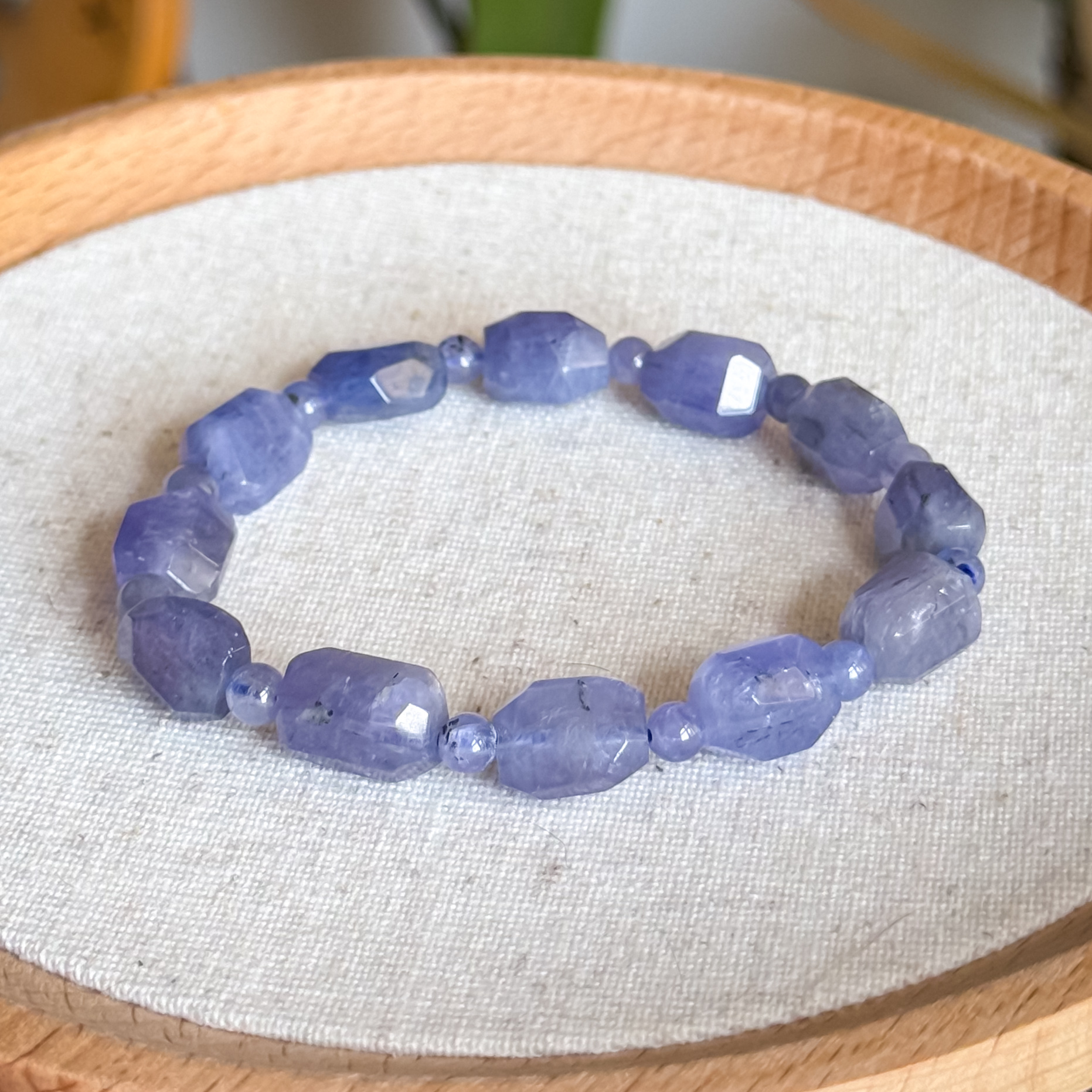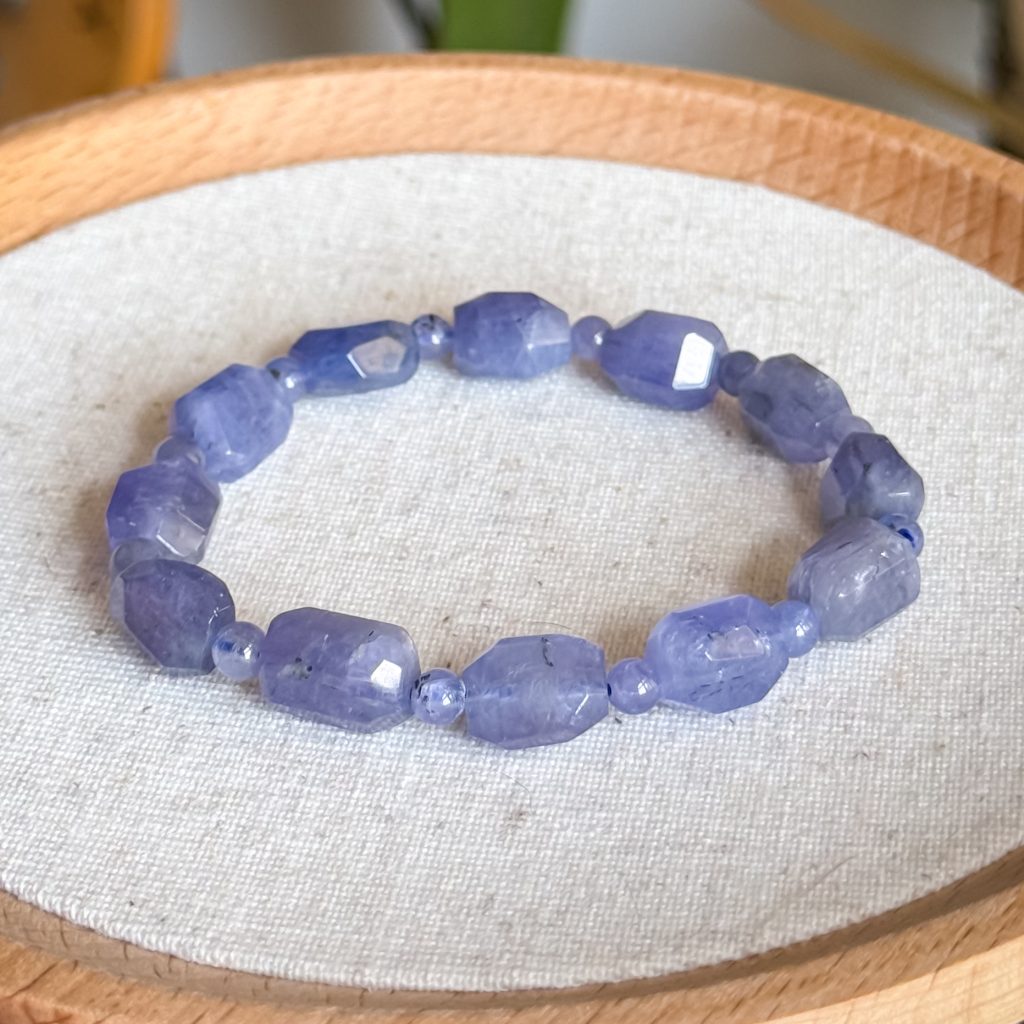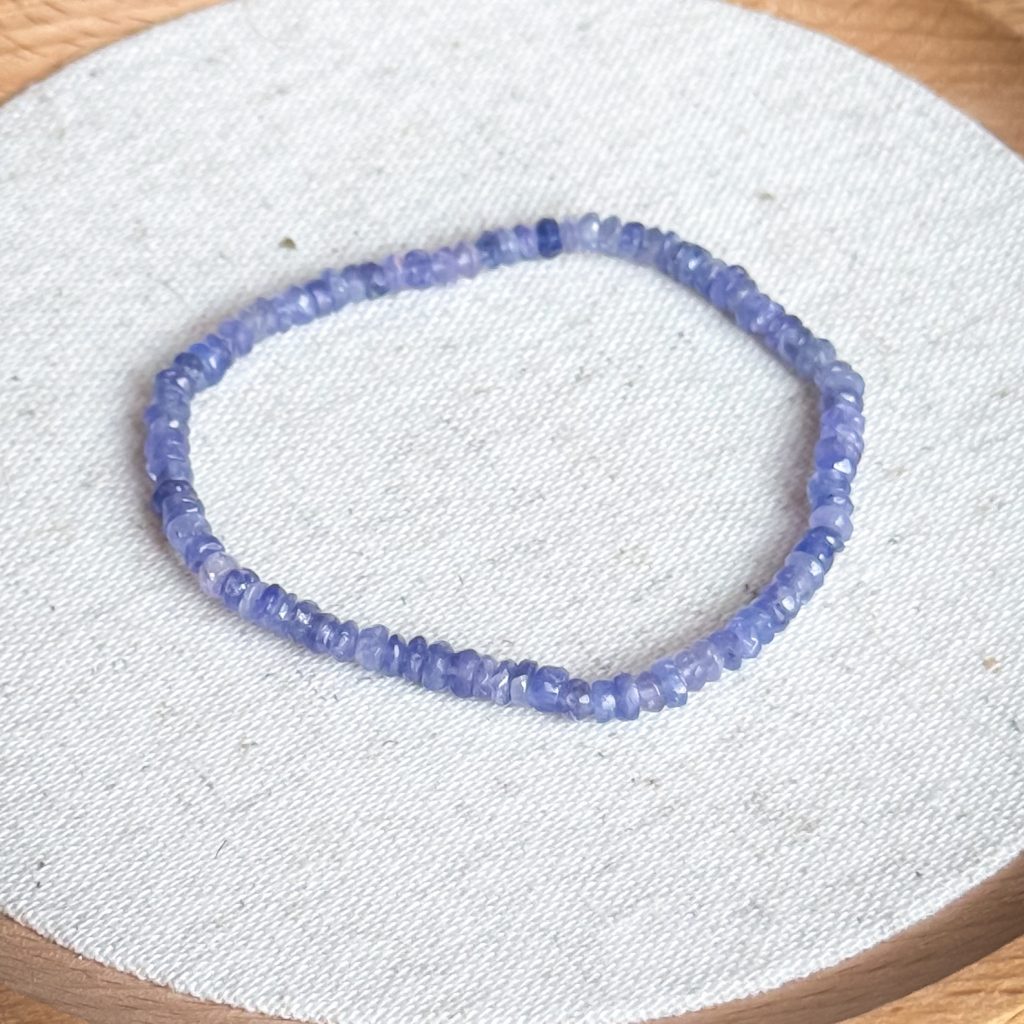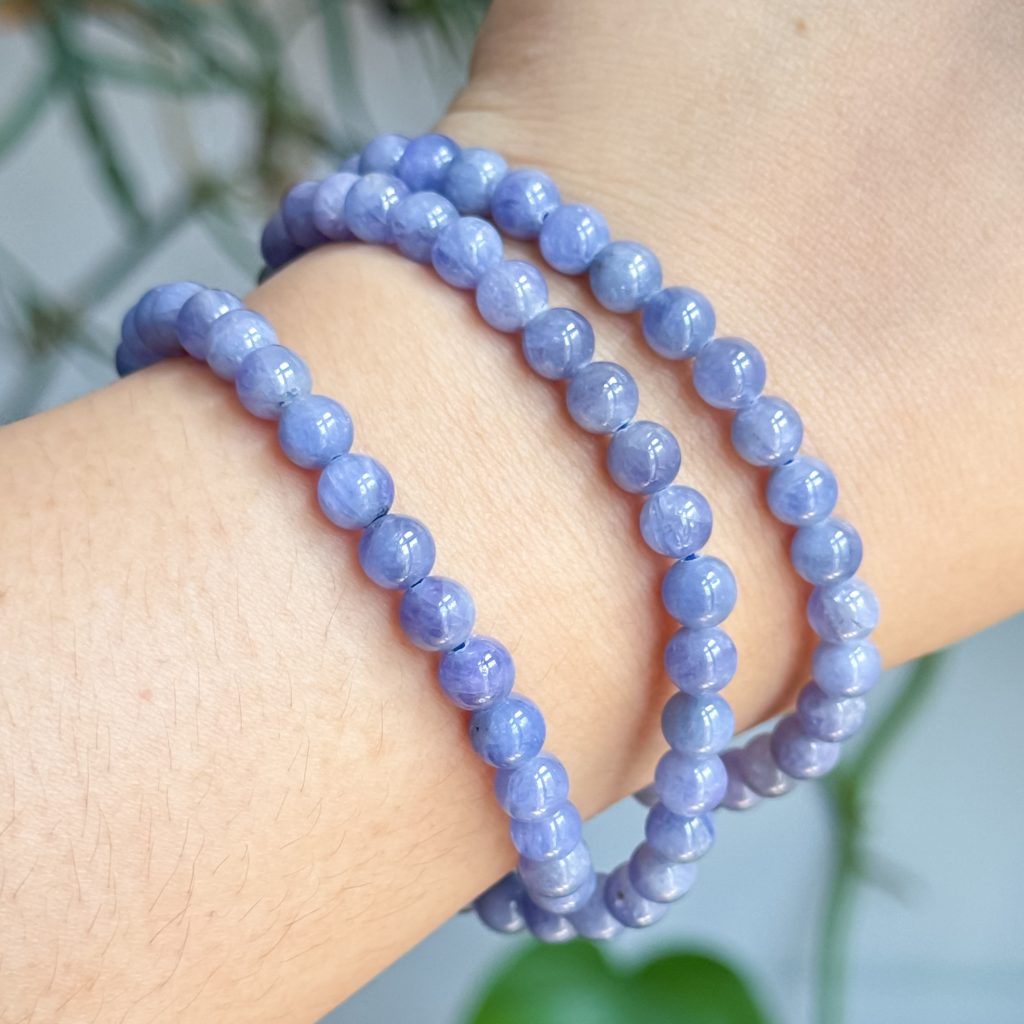
Free Local Shipping on Orders over ₱3000.

Gemstone Profile: Tanzanite

The single-locality Tanzanian blue-violet stone of higher consciousness, truthful voice, and new beginnings
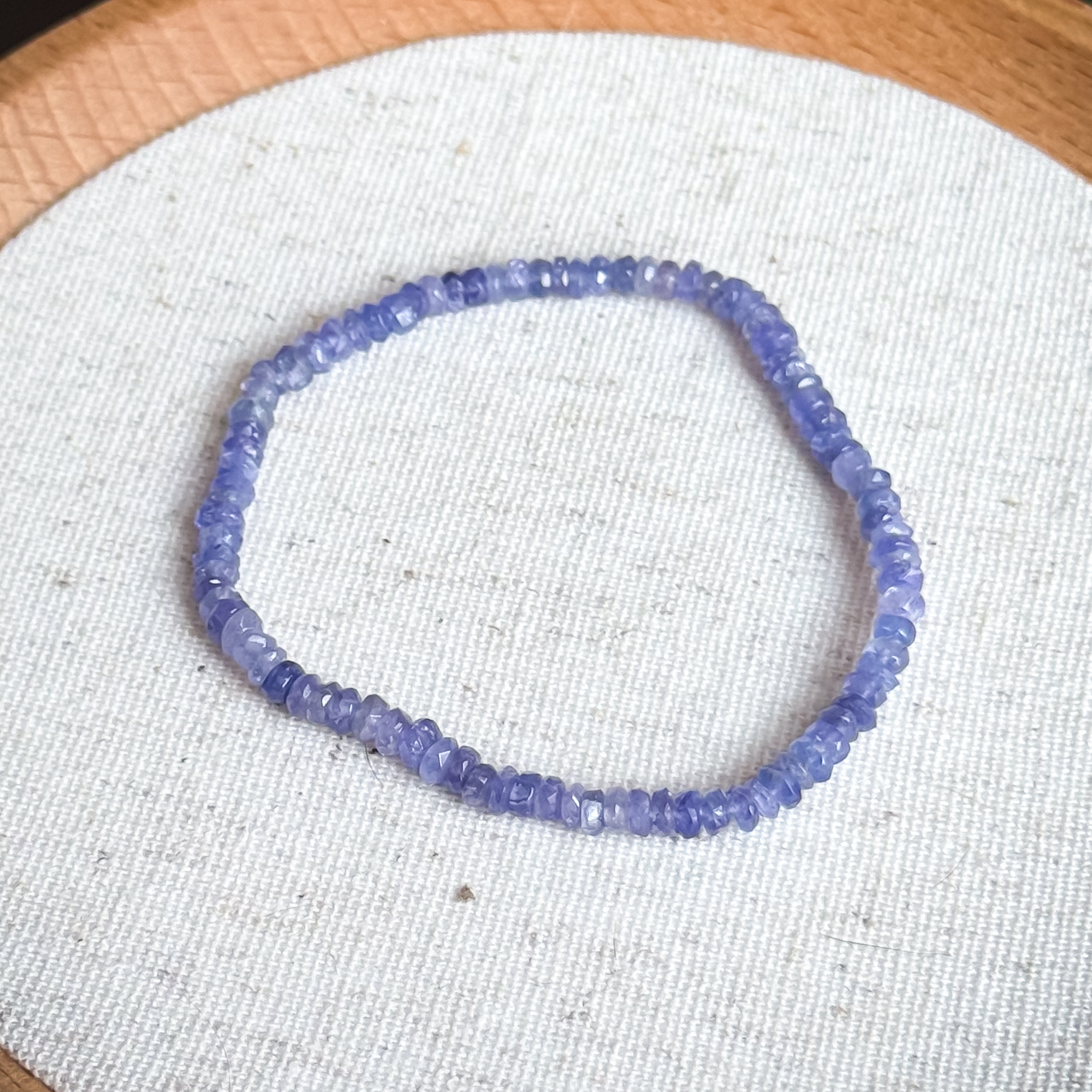
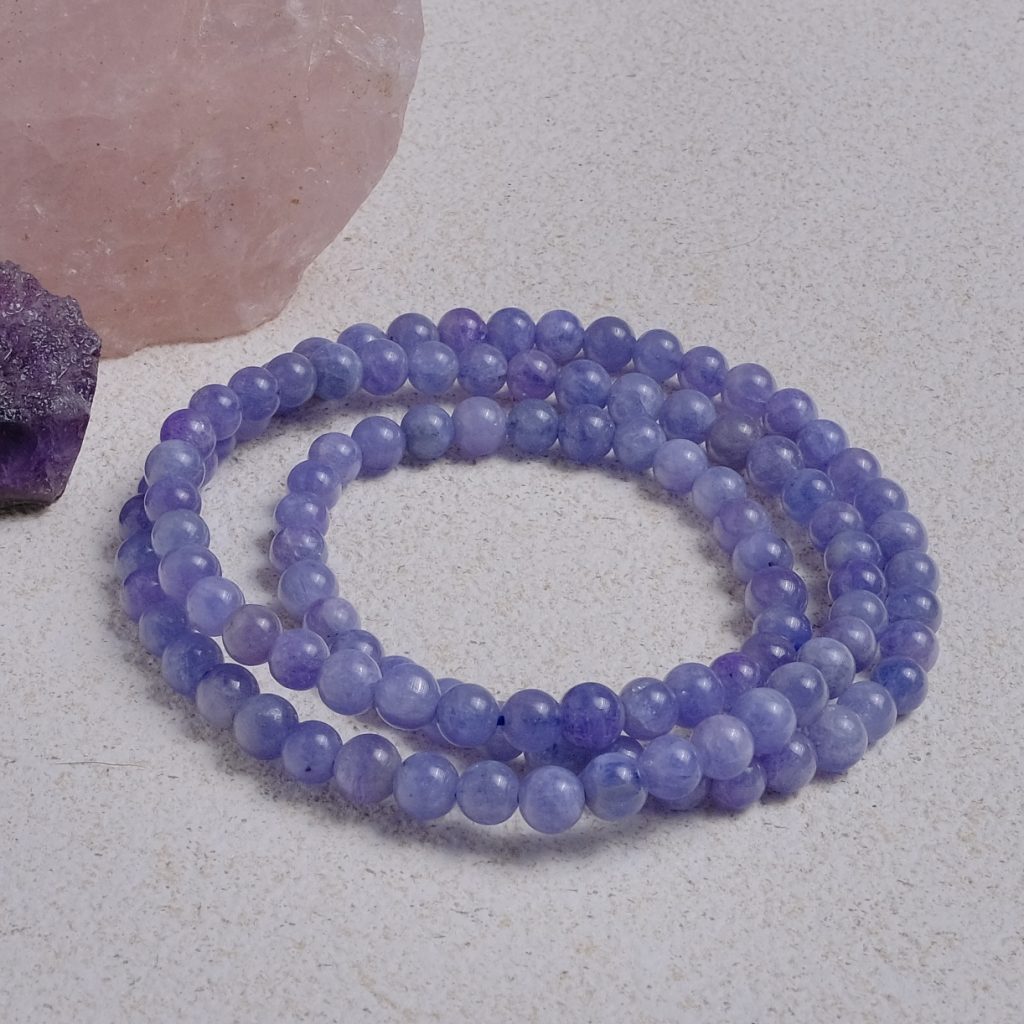
Tanzanite is one of the youngest major gemstones in the world — discovered only in 1967 — and one of the most geographically restricted, with all material coming from a single ~4 km² area at the foothills of Mount Kilimanjaro. Tiffany & Co. introduced it to the international market in 1968 and gave it its trade name. Because tanzanite emerged into Western jewelry and crystal practice only in the late 20th century, the metaphysical tradition around it is contemporary rather than ancient, drawing in part on the cultural significance of blue and indigo for the Maasai people of the region. Mineralogy and quality factors follow GIA. Metaphysical claims follow the crystal book library, with cross-reference to documented mining history and Maasai cultural context.

Mineral family

Blue-violet gem variety of the mineral zoisite, a calcium aluminum silicate hydroxide with formula Caâ‚‚Al₃(SiOâ‚„)(Siâ‚‚O₇)O(OH). Orthorhombic crystal system, Mohs hardness 6–7 (typically reported as 6.5). Color is caused by trace amounts of vanadium. Tanzanite’s defining gemological signature is its strong trichroism — depending on viewing direction, the same crystal shows blue, violet, and reddish-brown to burgundy. Cutters orient the rough specifically to display the desired blue-violet face-up color.

Color

Saturated blue with violet undertones is the most prized color, sometimes balanced toward pure blue (‘sapphire blue’) and sometimes toward pure violet, depending on lighting. Daylight tends to bring out more violet; incandescent light tends to bring out more pure blue. Untreated ‘green tanzanite’ (chromium-bearing), ‘yellow tanzanite,’ and rare ‘pink tanzanite’ (manganese-bearing) exist as collectors’ curiosities, but the commercial gemstone is essentially always the heat-treated blue-violet form.

Origin

Tanzanite is found in only one place on Earth: a single ~4 km² area in the Merelani Hills of northern Tanzania, at the foothills of Mount Kilimanjaro, in territory historically inhabited by the Maasai. There is no second source. Geological surveys have failed to find tanzanite anywhere else, and the unique combination of metamorphic conditions that produced it appears to be unrepeated worldwide.

Chakra alignment

Crown and Third Eye (primary — higher consciousness, intuition, spiritual perception) and Throat (secondary — truthful voice, communication of inner knowing). The blue-violet wavelength sits exactly at the meeting of throat and crown, which is why crystal authors describe tanzanite as the stone of ‘speaking the truth of higher knowing.’

Metaphysical benefits

Higher consciousness, intuition, spiritual transformation, truthful voice, communication of inner knowing, alignment of mind and heart, courage in change, new beginnings, magical thinking, life-transition support

Hardness (Mohs)

6–7 (commonly cited as 6.5). Reasonable hardness, but tanzanite is brittle and has one direction of perfect cleavage, making it more fragile than its hardness alone implies. Best suited to pendants, earrings, and brooches; ring use should be in well-protected bezel settings rather than exposed prong solitaires. Not recommended for daily-wear rings or active-life bracelets.

Rarity

Genuinely rare. Single-locality supply in finite Merelani Hills deposits is widely estimated at 20–30 years of remaining commercial production at current rates. Top-grade material with deep saturated blue-violet color, eye-clean clarity, and well-balanced trichroism is collectible and commands premium prices. Smaller commercial stones are widely available but still more uncommon than most well-known gemstones.

How to spot quality

Color is the dominant value driver — look for saturated, vivid blue-violet, neither washed-out nor too dark to read color. The ‘AAA’ or ‘investment grade’ designation in the trade refers to this top color band. View the stone under both daylight and incandescent light to confirm color stability and to see the trichroism. Eye-clean clarity is the standard for fine tanzanite. Ask explicitly about heat treatment — virtually all commercial tanzanite is heat-treated, and this is universally accepted in the trade, but should be disclosed.


Mineralogy & Trichroism

  • Tanzanite is the blue-violet gem variety of the mineral zoisite, formula Caâ‚‚Al₃(SiOâ‚„)(Siâ‚‚O₇)O(OH), in the orthorhombic crystal system. Hardness is 6–7 on the Mohs scale (typically reported as 6.5), with one direction of perfect cleavage and a brittle, somewhat fragile character. The color comes from trace amounts of vanadium substituting for aluminum in the crystal structure.9
  • Tanzanite’s defining gemological signature is its strong trichroism — three distinct colors visible when the crystal is viewed from three different crystallographic directions. GIA: ‘Tanzanite is strongly trichroic, showing different colors when viewed in different directions: blue, violet, and red-violet to brownish.’ This is the most pronounced trichroism of any major commercial gemstone.9
  • Because of trichroism, cutting tanzanite requires deliberate orientation of the rough. Cutters position the stone so that the most desirable face-up color (saturated blue-violet) is displayed through the table, sometimes accepting smaller yield for better color rather than maximizing carat weight from a poorly-oriented orientation.5,9
  • Color stability under different lighting: tanzanite tends to display more pure blue under incandescent or candlelight and more violet-purple under daylight or LED. The exact balance depends on the individual stone’s pleochroic mix, and stones are often rated by how well they hold a balanced blue-violet across lighting conditions.9
  • Other zoisite gem varieties — green chromium-bearing zoisite (‘green tanzanite’ or chrome-zoisite), yellow zoisite, manganese-bearing pink ‘thulite,’ and the famous green-zoisite-with-ruby host rock ‘anyolite’ (used for sculptural and ornamental work) — all share tanzanite’s species but differ in color, treatment, and gem-trade identity.9

Discovery & The Tiffany Naming

  • Tanzanite was discovered in 1967 in the Merelani Hills of northern Tanzania. The most widely-told origin story credits Manuel d’Souza, a Portuguese-Goan tailor and amateur prospector, with the formal discovery, after Maasai herders in the area pointed him to unusual blue stones lying on the ground. A popular but unverified version of the story holds that lightning ignited a brush fire on the dry savanna, the heat naturally annealed brown-yellow zoisite crystals on the surface into vivid blue, and a Maasai herder named Ali Juuyawatu first noticed the transformed gems.9
  • The lightning-fire origin story has the elegance of explaining one of tanzanite’s central facts: nearly all commercial tanzanite is heat-treated to bring out the blue color. The ‘Maasai herder finds blue stones after a brush fire’ narrative connects naturally to the heat-treatment reality, which is why it has become the canonical telling — but mineralogists generally treat the lightning-fire account as folk origin rather than verified history.9
  • Tiffany & Co. introduced tanzanite to the international market in 1968 — only one year after discovery — and gave it the trade name ‘tanzanite’ after the country of origin. Tiffany’s Henry Platt is credited with the naming; Tiffany reportedly considered ‘blue zoisite’ but rejected the name as too similar in sound to ‘blue suicide.’ The 1968 Tiffany launch made tanzanite an instant international celebrity.9,11
  • Within a year of the Tiffany launch, tanzanite became one of the most sought-after blue gemstones in the world, providing a more affordable alternative to fine sapphire while offering a unique blue-violet hue not seen in any other gem. By the 1970s, tanzanite was a staple of high-end jewelry collections, and the Merelani mines had become one of Tanzania’s most strategically important resources.11
  • December birthstone — tanzanite was added to the modern birthstone list by the American Gem Trade Association (AGTA) in 2002, joining turquoise and zircon as the official December birthstones. Tanzanite’s addition to this list is one of the most recent changes to the birthstone canon.9

The Single Locality & Heat Treatment

  • All commercial tanzanite comes from a single ~4 km² area in the Merelani Hills of northern Tanzania, at the foothills of Mount Kilimanjaro. The deposit is divided into several mining blocks (A, B, C, D — the Tanzanian government-designated mining areas), with TanzaniteOne and similar industrial-scale operations alongside smaller artisanal blocks. There is no second source. Despite extensive global mineral exploration, no comparable tanzanite-producing deposit has ever been identified.9,11
  • The geological setting is unusual: tanzanite formed during regional metamorphism of vanadium-bearing carbonate-pelite rocks under specific pressure and temperature conditions about 585 million years ago. The combination of metamorphic environment, vanadium availability, and tectonic uplift required to bring the crystals to the surface is sufficiently rare that tanzanite is a ‘one-deposit gem’ on a global scale.11
  • Heat treatment is essentially universal. Most natural tanzanite as mined is brown-yellow due to a mix of vanadium oxidation states; heating to roughly 500–650 °C in air shifts the vanadium to the oxidation state that produces the saturated blue-violet color. The change is permanent and stable. GIA: ‘Heat treatment of tanzanite to produce the desirable blue color is virtually universal in the trade, is widely disclosed, and is permanent and stable.’9
  • Naturally-blue, untreated tanzanite is reported to occur at a rate of approximately one in every thousand stones. Untreated material is sold as a collector’s curiosity at substantial premium and should be supported by laboratory documentation from a respected gem lab (GIA, AGL, or equivalent). Most consumers should expect their tanzanite to be heat-treated and should regard this as the trade norm rather than a flaw.9
  • Sustainability and ethics — the Merelani mines have had a difficult history including periods of conflict, child labor, and worker safety issues, particularly in artisanal blocks. The Tanzanite Foundation and subsequent initiatives have worked to improve conditions, fund education and infrastructure for the surrounding communities, and establish chain-of-custody documentation. Ethical sourcing matters more for tanzanite than for many other gems because of this concentrated single-locality history; reputable suppliers should be able to provide provenance information.11

Cultural Context & Maasai Connection

  • The Merelani Hills are located in the traditional homelands of the Maasai people, and the discovery, mining, and ongoing significance of tanzanite are deeply intertwined with Maasai history and culture. Blue is a sacred color in Maasai tradition, associated with the sky and with the divine; blue beadwork, particularly indigo and royal blue, is a traditional gift to a Maasai mother after the safe birth of a child.11
  • The ‘stone of new beginnings’ metaphysical identity that has grown around tanzanite draws explicitly on this Maasai blessing tradition. Modern crystal authors and the Tanzanite Foundation alike have promoted the association of tanzanite with new birth, new beginnings, and the celebration of life transitions. Newcombe & Martin: ‘Tanzanite is associated with new beginnings — a tradition that draws on the Maasai practice of giving blue beads to mothers after the safe arrival of a child.’5
  • The Maasai community has, over time, played an increasingly active role in tanzanite mining and benefit-sharing. The Tanzanian government’s localization of the cutting and polishing industry — requiring rough above a certain size to be cut domestically — has aimed to increase the proportion of tanzanite revenue retained in the country and the surrounding community.11
  • Marketing tradition since 1968 has framed tanzanite as a ‘thousand-times-rarer-than-diamond’ gemstone, drawing on the genuine mathematical reality that diamonds are mined globally while tanzanite is restricted to a single 4-km² zone. This rarity narrative has been central to tanzanite’s positioning as a high-value collector’s gemstone and December birthstone.9

Metaphysical Properties (Traditional Claims)

  • Higher consciousness and spiritual perception — tanzanite is treated across the literature as one of the foremost stones for crown-chakra activation and spiritual perception. Hall: ‘Tanzanite is one of the strongest stones for opening up to spiritual realities… it activates the throat, third eye, and crown chakras together, allowing for profound spiritual perception and communication.’ The triple-chakra activation is unusual and is often cited as tanzanite’s distinctive metaphysical signature.2
  • Truthful voice and the bridge between knowing and speaking — perhaps tanzanite’s most actionable claim. Pearson: ‘Tanzanite bridges the gap between what you know in your heart and what you are willing to say out loud. It is a stone for those who must speak their truth, especially when it is difficult.’ This makes it a popular stone for public speakers, teachers, therapists, and those undertaking difficult conversations.4
  • Stone of magic and transformation — the metaphysical literature consistently associates tanzanite with magical thinking, ritual practice, and transformative inner work. Perrakis: ‘Tanzanite is the stone of magic — the recognition that reality is more flexible and more responsive to consciousness than ordinary perception suggests.’1
  • New beginnings and life transitions — the Maasai-influenced ‘stone of new beginnings’ tradition extends throughout modern crystal practice. Tanzanite is widely recommended for major life transitions: a birth, a wedding, a divorce, a major career change, a move, a death of a loved one. Frazier: ‘Tanzanite is the stone for the threshold moments of life — the points where one chapter ends and another begins.’6
  • Calming the mind and dissolving anxiety — despite its ‘high vibration’ reputation, tanzanite is also widely recommended for the easing of overactive minds, anxiety, and racing thoughts. Adams Media: ‘Tanzanite calms the mind by giving it something larger to attune to — the stone is grounding precisely because it is so spiritually expansive.’7
  • Intuition and the inner teacher — tanzanite is used in modern crystal practice to develop and trust intuitive perception. Newcombe & Martin: ‘Tanzanite teaches the wearer to listen to the still small voice within and to act on that knowing even when external evidence is incomplete.’5

Physical-Healing Claims in the Literature

Traditional use only — not medical advice.
  • Brain, head, and eyes — as a crown-chakra stone, tanzanite is widely associated in the literature with the head, brain, eyes, and central nervous system. Hall: ‘tanzanite supports the brain, eyes, and the central nervous system, and is used by practitioners working with neurological conditions.’ These are traditional metaphysical claims, not biomedical ones, and are offered alongside, not in place of, medical care.2
  • Throat and voice — the throat-chakra component of tanzanite extends to associations with the larynx, vocal cords, thyroid, and respiratory system. Adams Media: ‘Tanzanite supports vocal expression, the thyroid, and the throat region, particularly for those who use their voice professionally.’7
  • Migraine and tension headaches — practitioners use tanzanite in head-and-temple healing layouts for migraine, tension headaches, and stress-related head pain. Frazier: ‘Tanzanite, placed at the temples or third eye, is used to ease migraines and the heavy fatigue of nervous-system overload.’6
  • Detoxification and the immune system — tanzanite is described in the literature as supportive of detoxification, immune function, and recovery, particularly the long-arc convalescent phase. Silbey: ‘Tanzanite supports the body’s slow rebuilding after illness, especially when emotional and spiritual integration is part of the recovery.’8
  • Skin and complexion — tanzanite is associated in some sources with skin health, complexion, and the easing of skin-related stress responses. Newcombe & Martin: ‘Tanzanite is sometimes used in beauty and skin-clarity work, particularly when the skin condition is stress-related.’5

Jewelry & Care

  • Durability — at Mohs 6–7 (commonly 6.5), tanzanite is reasonably hard but is brittle and has one direction of perfect cleavage, which makes it more fragile in actual wear than the hardness number alone implies. GIA: ‘Tanzanite has only fair toughness, so it can be vulnerable to abrasion and breakage. It is best for earrings and pendants, while rings should be worn with care.’ Bezel-protected ring settings are strongly recommended over exposed prong settings.9
  • Cleaning — warm soapy water with a soft cloth or soft brush is the only safe method. GIA: ‘Ultrasonic cleaners are NEVER recommended for tanzanite, and steam cleaners are also unsafe.’ The vibration of ultrasonic cleaners can fracture tanzanite along its cleavage plane, and steam can cause thermal shock. Always remove tanzanite jewelry before cleaning other items in an ultrasonic.9
  • Heat and thermal shock — avoid sudden temperature changes. Do not wear tanzanite in hot tubs, saunas, or hot showers; do not subject it to torch flame during repair (a competent jeweler will know to remove the stone before heating the setting). Tanzanite’s color is stable under normal jewelry conditions, but extreme heat could potentially shift it back toward a brownish hue.9
  • Acid and chemical sensitivity — avoid prolonged contact with hydrochloric acid, household cleaners, perfumes, and hairsprays. Tanzanite is reasonably stable in normal wear, but its surface can be etched by strong acids, and its setting (typically delicate work because of the stone’s value) can be damaged by chemicals.9
  • Settings and design — tanzanite pairs beautifully with both white metals (platinum, white gold, palladium) — which let the blue-violet color sing without warm interference — and yellow gold for a more vintage or ‘royal’ presentation. Rose gold creates an unusual and distinctive contrast. Most fine tanzanite is cut in oval, pear, cushion, or trillion shapes optimized for the trichroism and the saturation of the deep blue-violet.9
  • Storage — store tanzanite jewelry separately from harder stones (diamond, sapphire, ruby, topaz, quartz) which can scratch or chip it. Soft pouches or lined boxes are ideal. Because of single-locality value and fragility, individual padded compartments are preferable for fine pieces.9

References

  1. Athena Perrakis, Crystalpedia: The Wisdom, History, and Healing Power of More Than 180 Sacred Stones, ‘Tanzanite’ entry on magic, transformation, and Maasai cultural context.
  2. Judy Hall, The Crystal Bible and 101 Power Crystals: The Ultimate Guide, ‘Tanzanite’ entries on triple-chakra activation and higher consciousness.
  3. Yulia Van Doren, Crystals: The Modern Guide to Crystal Healing, ‘Tanzanite’ entry.
  4. Nicholas Pearson, Crystal Healing for the Heart, tanzanite as the bridge between heart-knowing and truthful voice.
  5. Rachel Newcombe & Claudia Martin, The Complete Crystal Sourcebook, ‘Tanzanite’ entry covering mineralogy, Tanzanian source, and ‘stone of new beginnings’ Maasai-derived tradition.
  6. Karen Frazier, Crystals for Beginners: The Guide to Get Started with the Healing Power of Crystals, ‘Tanzanite’ section on threshold moments and life transitions.
  7. Adams Media, The Encyclopedia of Crystals, Herbs, and New Age Elements, ‘Tanzanite’ entry on calming overactive minds.
  8. Uma Silbey, Emotional Healing with Crystals and Stones, ‘Tanzanite’ on long-arc recovery and integration work.
  9. Gemological Institute of America (GIA), ‘Tanzanite Description,’ ‘Tanzanite Quality Factors,’ ‘Tanzanite History & Lore,’ and ‘Tanzanite Care & Cleaning’ resources, including coverage of trichroism, heat treatment universality, and December birthstone status. https://www.gia.edu/tanzanite
  10. GIA, ‘Tanzanite from the Merelani Hills, Tanzania,’ Gems & Gemology technical coverage of the single-locality geology, vanadium chromophore, and 585-million-year metamorphic origin.
  11. Tanzanite Foundation, TanzaniteOne, and Tiffany & Co. archival materials documenting the 1967 Merelani discovery, the 1968 Tiffany launch and naming by Henry Platt, mining-block administration in the Merelani Hills, and Maasai community partnership programs.

Out of stock

1,800.00

Share the Post:

Related Posts