Free Local Shipping on Orders over ₱3000.

Gemstone Profile: Tourmaline

The rainbow stone of protection, heart healing, and spiritual electricity

Tourmaline is not one stone but a whole family. Its name comes from the Sinhalese “toramalli” — a mislabeled shipment of schorl first carried the name into Europe. Because different colors are different species (or different chemistries of the same species), they have distinct metaphysical associations. References below cite scientific/gemological sources (GIA) separately from the metaphysical tradition (Perrakis, Hall, Pearson, Van Doren, etc.).

Mineral family

Borosilicate supergroup — a family of 40+ mineral species sharing the same crystal structure but differing in chemistry. Major species include elbaite, schorl, dravite, uvite, and liddicoatite.

Color

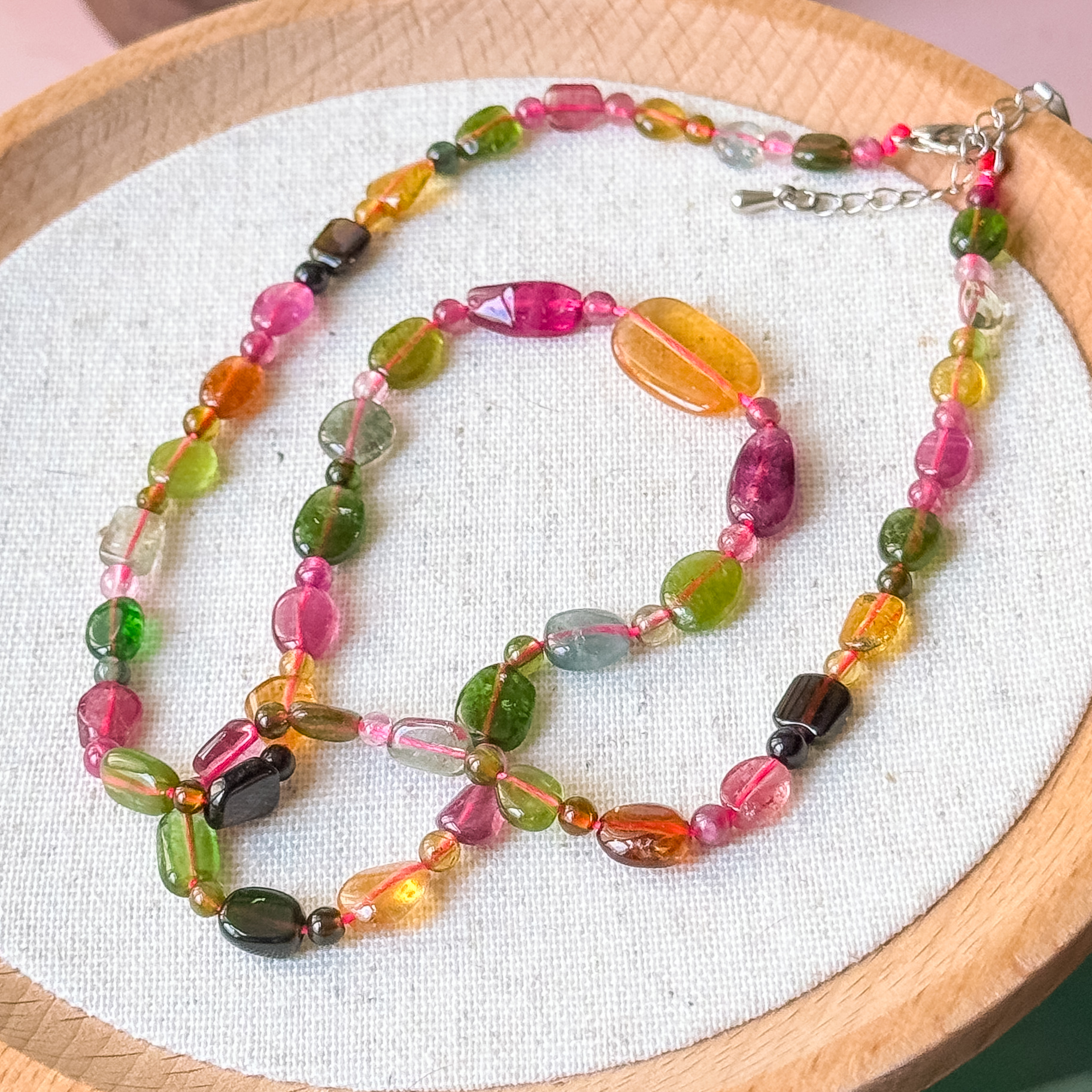
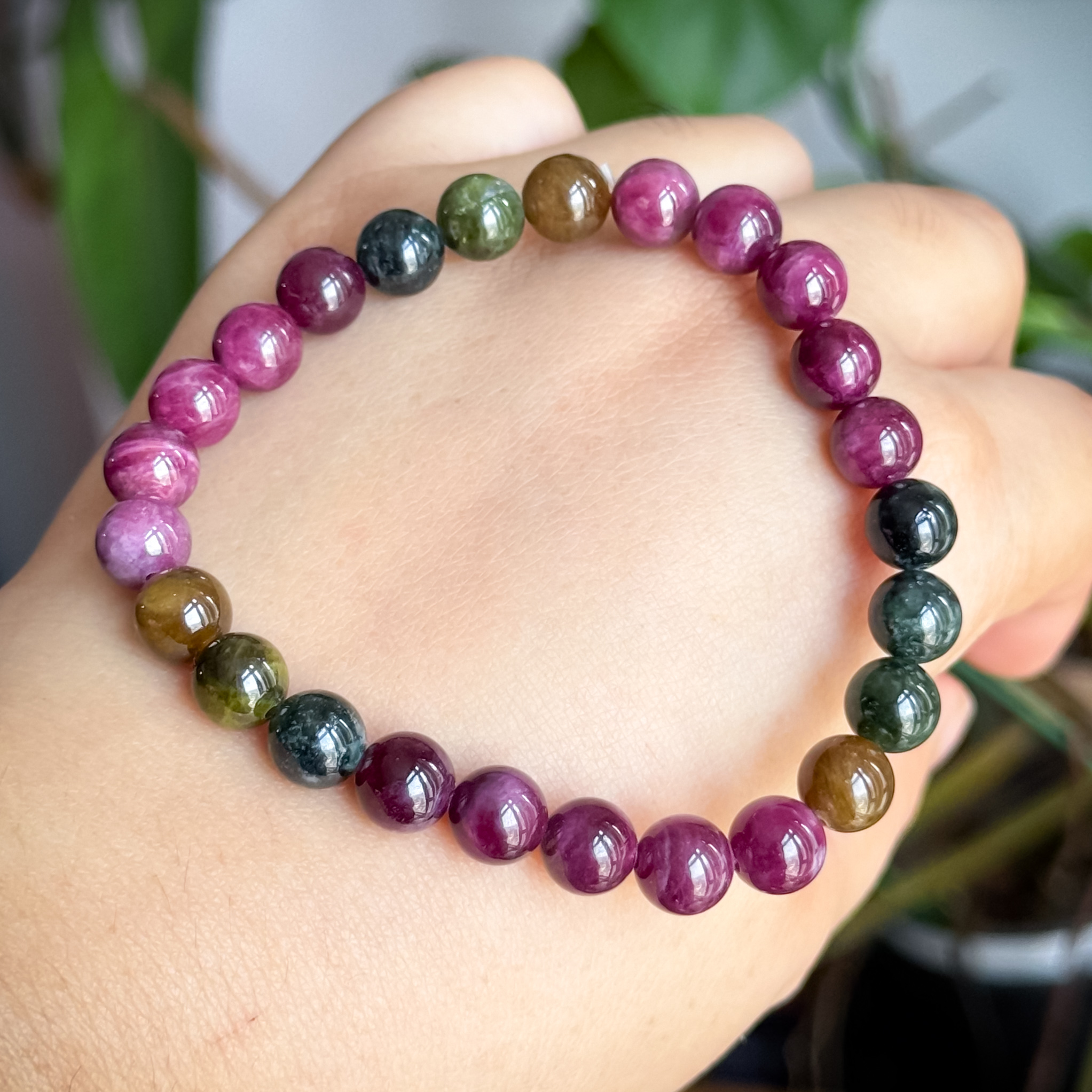
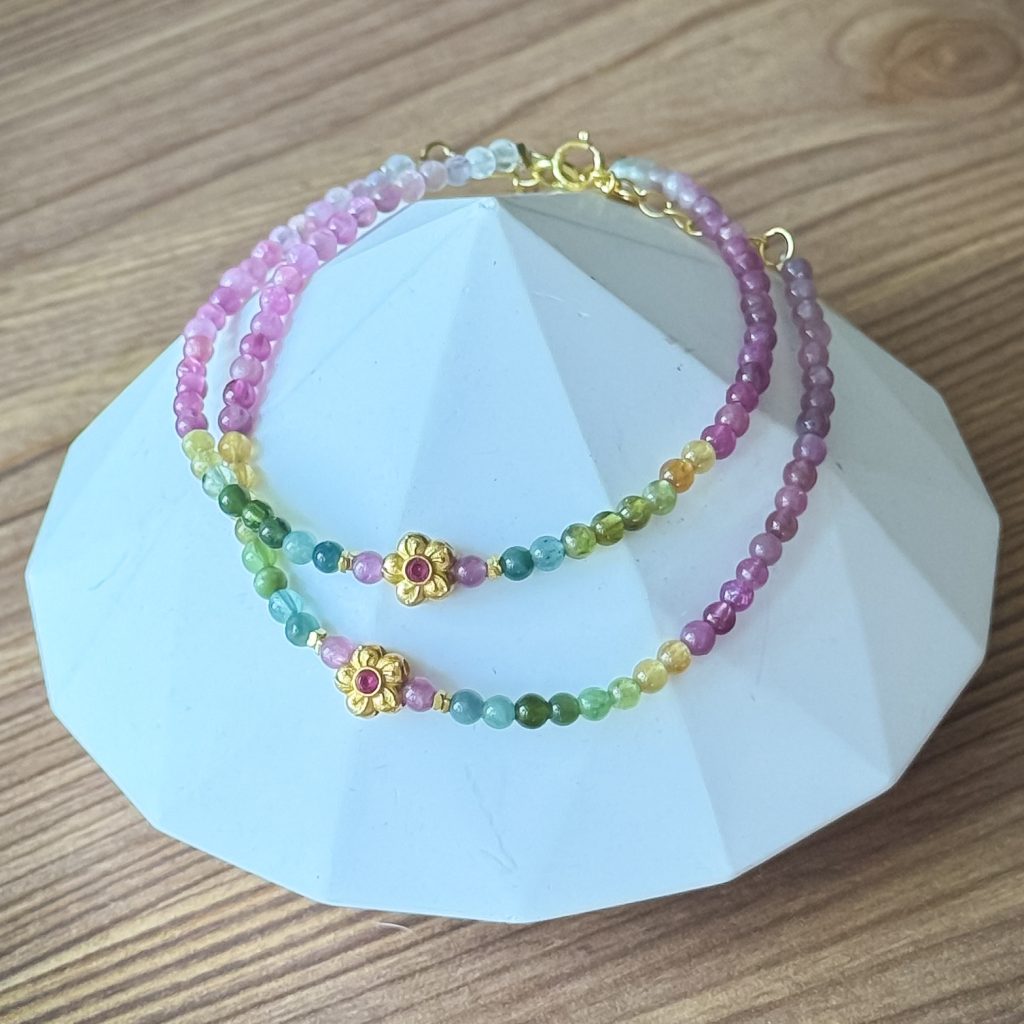
Every color of the rainbow; frequently color-zoned within a single crystal. The most important gem-producing species (elbaite) yields pink, red, green, blue, violet, yellow, and bi/tri-color stones. Schorl is black; dravite is brown.

Origin

Brazil (Minas Gerais, Paraíba), Afghanistan, Pakistan, Madagascar, Mozambique, Namibia, Nigeria, Russia, Sri Lanka, Myanmar, United States (Maine, California)

Chakra alignment

Varies by color — Black (Root), Green/Pink/Watermelon/Rubellite (Heart), Indicolite (Throat + Third Eye), Paraíba (Heart + Throat)

Metaphysical benefits

Protection, heart healing, emotional balance, grounding, spiritual electricity

Hardness (Mohs)

7–7.5

Rarity

Black (schorl) is common and affordable; fine gem-grade elbaite (rubellite, indicolite, vivid green) is uncommon and costly; Paraíba is extremely rare and among the most valuable colored gems in the world

How to spot quality

Strong, saturated color free of murky tones; clean transparency for gem-grade pieces; visible parallel striations on the crystal faces (true tourmaline marker). Tourmaline is pleochroic — it shows different colors when viewed from different angles, so good cutters orient the best color face-up. Watch for heat treatment in Paraíba (common) and dyed/glass imitations at the low end.

Mineralogy & Formation

  • Tourmaline is a supergroup of complex borosilicate minerals — over 40 recognized species share the same trigonal crystal structure but differ in chemistry. The major gem-producing species are elbaite, liddicoatite, dravite, uvite, and schorl.7
  • Tourmaline crystals are typically long, striated prisms with a distinctive triangular or rounded-triangular cross-section; many specimens are strongly color-zoned along or across the crystal.7
  • Color chemistry: iron and titanium produce greens and blues; manganese produces reds, pinks, and yellows; copper produces the signature vivid blue-green of Paraíba; chromium produces the rare chrome green.7
  • Tourmaline is strongly pleochroic — the same crystal shows different colors when viewed from different crystallographic directions, which matters to cutters who orient stones for the best face-up color.2,7
  • Tourmaline is both piezoelectric (generates a charge under pressure) and pyroelectric (generates a charge when heated). Dutch traders in the 1700s noticed that warmed tourmaline attracted ash and used it to clean their clay pipes — earning the stone the nickname “ash-drawer.”1,2
  • The name “tourmaline” comes from the Sinhalese word “toramalli,” originally used to describe yellow zircon. A shipment of black schorl was mislabeled “turmalin” in transit, and the name transferred to the entire family.1
  • Hardness is 7–7.5 Mohs, making tourmaline durable enough for daily-wear jewelry including rings.1,10

Color Variations

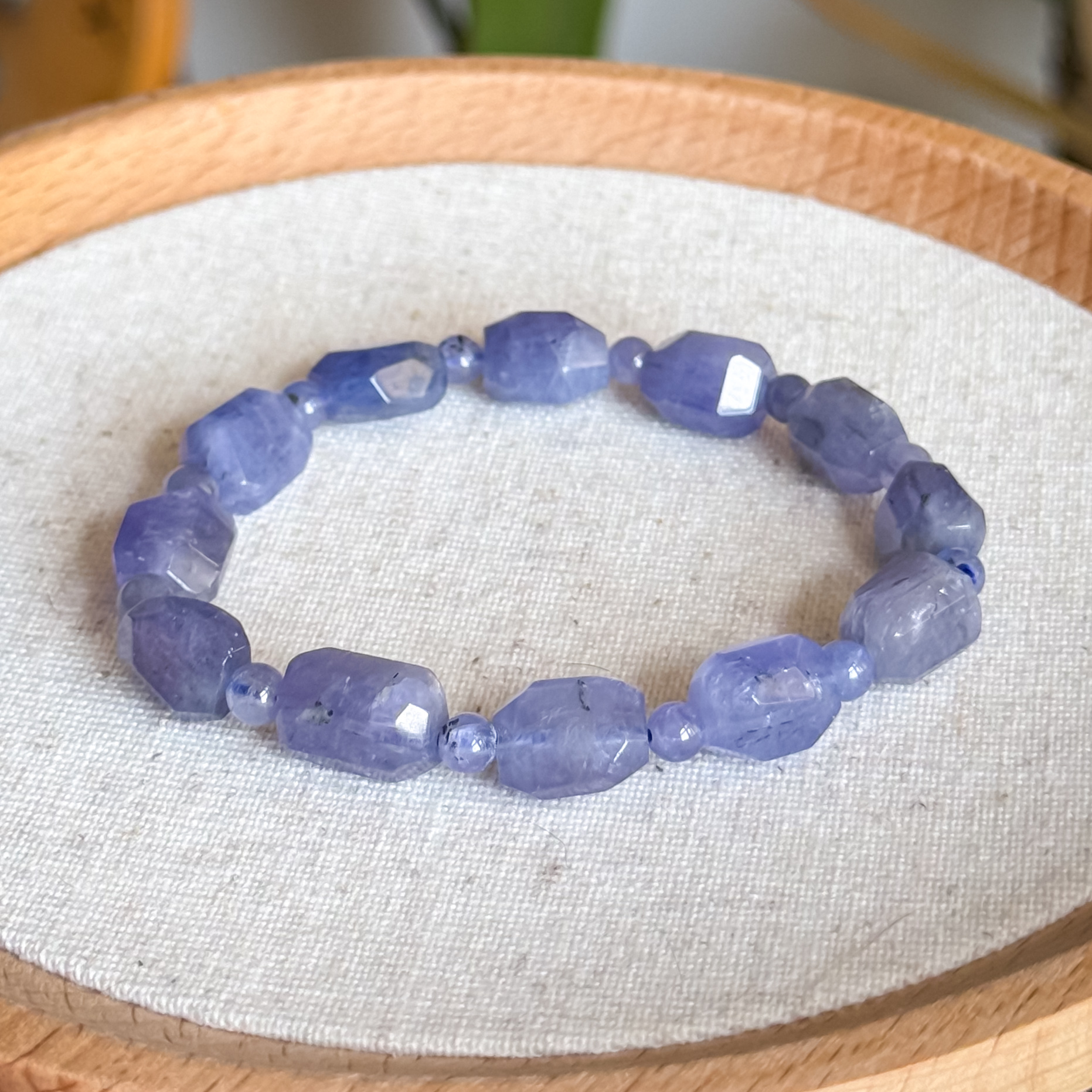
Each color is its own stone with its own chemistry, chakra, and tradition — but all share the tourmaline family’s core themes of protection and heart work.
  • Black Tourmaline (Schorl) — iron-rich, the most common and affordable variety. Opaque jet-black with a vitreous luster; often forms in granite and pegmatites. Root chakra. The classic crystal bodyguard: Perrakis calls it “the most protective stone you can work with,” and Hall and Van Doren recommend it for deflecting negativity, psychic attack, and electromagnetic stress.1,2,3,4
  • Green Tourmaline (Verdelite) — iron- or chromium-colored elbaite. Heart chakra. First found in 1500s Brazil and initially mistaken for emerald; major American deposits were discovered in 1890s California at the Pala mine. Perrakis frames it as the masculine counterpart to pink tourmaline’s feminine vibration — strengthening, revitalizing, and connecting to nature spirits.1
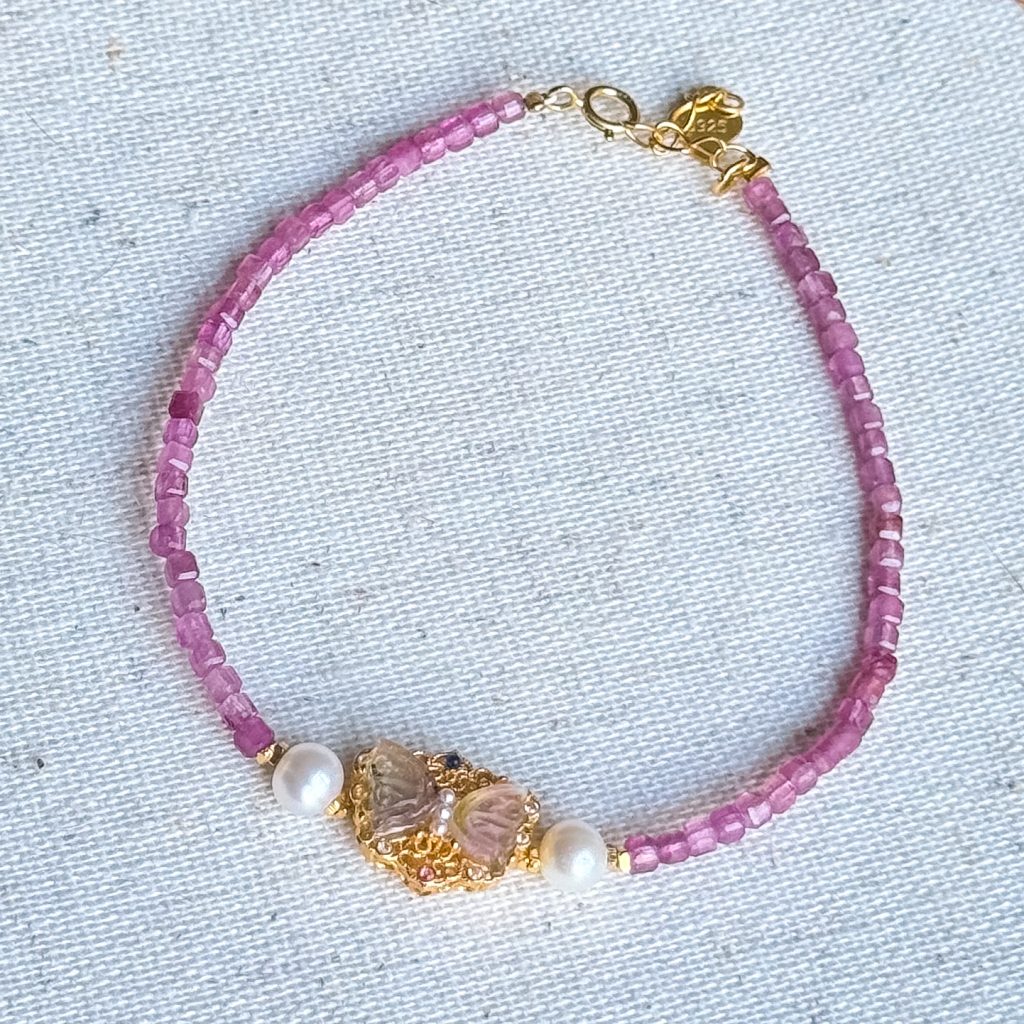
  • Pink Tourmaline — manganese-colored elbaite. Heart chakra. First mined commercially from Maine and California in the 1800s; Tiffany & Co. helped popularize it as American-sourced jewelry. Perrakis calls it a talisman of unconditional love, receptivity, and grace — especially useful for emotional wounds carried from childhood and the Divine Feminine.1
  • Rubellite — the red-to-raspberry variety, colored by manganese. Heart (and sometimes Root) chakra. Named from Latin “rubellus” (reddish); historically confused with ruby. Catherine the Great’s “Caesar’s Ruby,” a 250-carat Russian crown jewel, was re-identified in 1922 as rubellite tourmaline. Goes deeper than softer heart stones — connecting to universal love, not just human love.1
  • Indicolite (Blue Tourmaline) — the rarest color of tourmaline, colored by iron, magnesium, and aluminum rather than the copper that lights up other blue gems. Throat + Third Eye chakras. Named in the early 1800s by Brazilian mineralogist José Bonifácio de Andrada e Silva for its indigo hue. Strongly pleochroic; ranges from light sea blue to deep indigo. Used for psychic communication and getting to the root of emotional trauma.1
  • Paraíba Tourmaline — an elbaite colored by copper, producing an almost neon violetish or greenish blue. First discovered in the Paraíba state of Brazil in the late 1980s; later found in Mozambique and Nigeria. Heart + Throat. One of the most valuable colored gems in the world. Hall describes it as polarizing light into the recesses of the heart and encouraging forgiveness.2,7
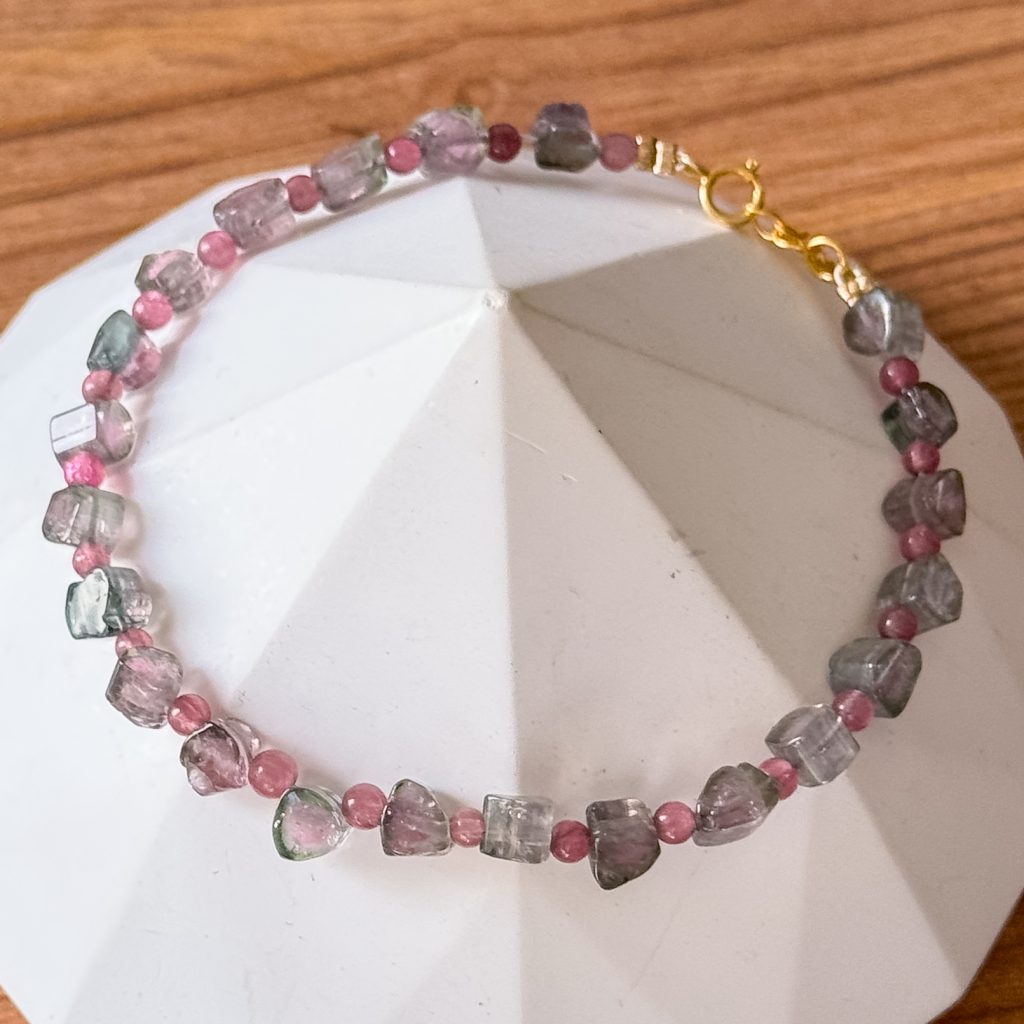
  • Watermelon Tourmaline — a bi-color elbaite with a pink or red core, a thin white band, and a green outer shell, formed as trace minerals shifted during growth. First discovered in Maine in 1902; Brazil’s Minas Gerais produces the finest specimens. Heart chakra. Perrakis and Pearson both frame it as balancing self-love (pink center) with outward love (green shell) — ideal for caregivers to prevent burnout.1,4
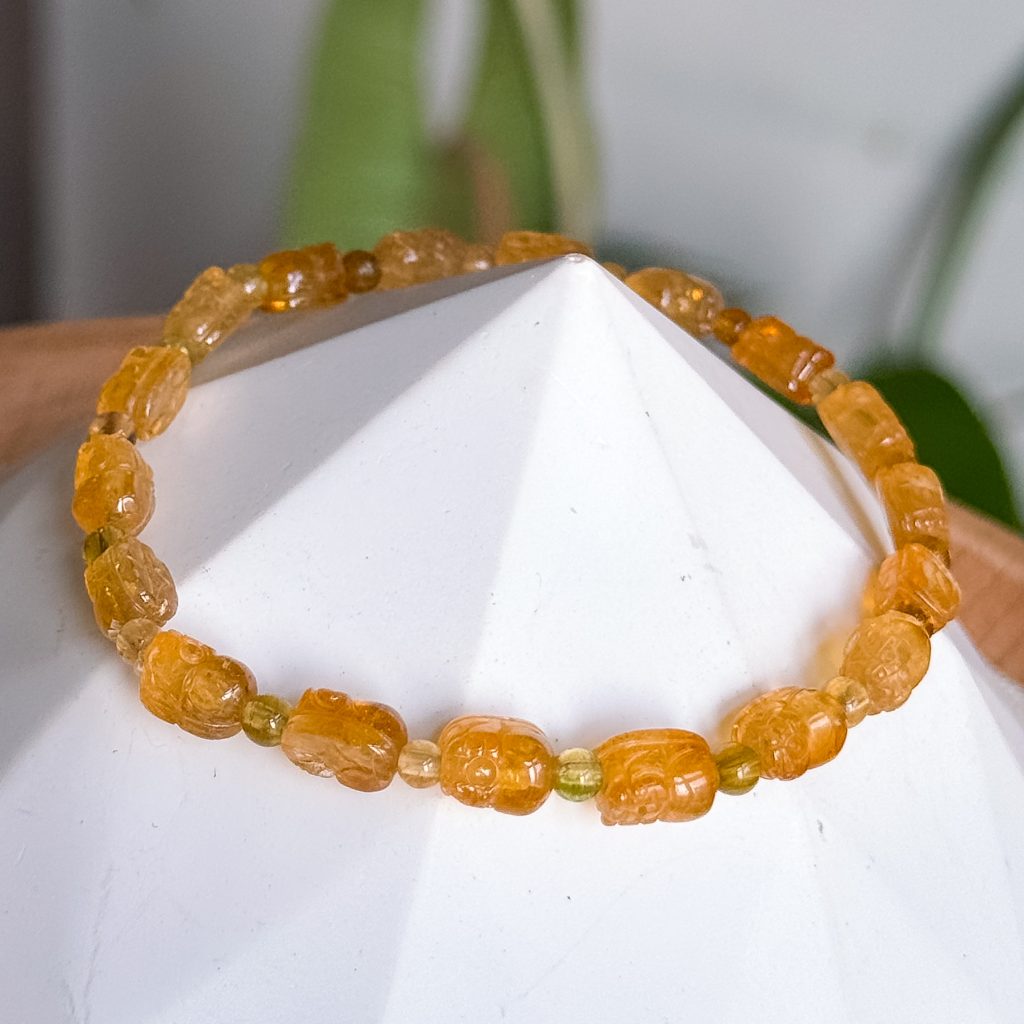
  • Dravite — magnesium-rich species, typically brown to yellow-brown. Root and Solar Plexus. Gienger associates it with family and community bonds; less commonly used in fine jewelry but valued in crystal healing.5
  • Tourmalinated Quartz — clear quartz with black tourmaline rods grown through it. Combines quartz’s amplification with schorl’s protection, widely recommended as a balancing stone for both energies.1,5

Quality Factors (GIA)

  • Color is the overriding value driver for tourmaline. The finest stones have vivid, saturated hue with clean transparency; muddy or grayish tones drop value sharply.8
  • Because tourmaline is strongly pleochroic, cutters orient each stone so the strongest color is face-up. A well-oriented cut can dramatically change the value of a rough crystal.8
  • Paraíba’s copper-bearing blue-green is so prized that certified stones from the original Brazilian deposit routinely command the highest per-carat prices of any tourmaline — and typically any colored gem outside ruby, sapphire, and emerald.7
  • Treatments to know about: heat treatment is common in Paraíba and some reds to intensify color; irradiation can deepen pinks and reds. Both are stable and disclosed by reputable sellers. GIA reports identify whether material is natural and name any detectable treatments.8

Historic & Cultural Lore

  • Egyptian legend holds that tourmaline formed in the center of the Earth and passed through a rainbow on its way to the sun — an origin myth that accounts for its full-spectrum colors. African and Australian traditions describe tourmaline as a seer’s stone capable of revealing the future.1
  • Chinese empress dowager Cixi (late 1800s) was especially fond of tourmaline, commissioning it into jewelry and carved snuff bottles; her patronage made China one of the first large markets for American pink and green tourmaline.1
  • Tourmaline was used by Dutch mariners to clean their pipes (the pyroelectric “ash-drawer” trick) and by Chinese officials, who set Burmese black tourmaline into the buttons of Mandarins’ hats.2
  • Catherine the Great’s “Caesar’s Ruby” — gifted in 1777 by King Gustav III of Sweden — was catalogued as a ruby for centuries until a 1922 inventory of the Russian crown jewels re-identified it as a 250-carat rubellite tourmaline.1
  • Tourmaline’s unusual electrical behavior (piezoelectric and pyroelectric) was only scientifically documented in the 18th century, and crystal lore from that period treats it as almost magical — two parallel slices appear transparent from one direction and opaque from another; a broken crystal’s ends act like the poles of a magnet.2

Metaphysical Properties (Traditional Claims)

  • Protection (all colors) — every variety of tourmaline is described as protective, with black/schorl the strongest. Perrakis recommends placing schorl at the four corners of a property to deflect negativity; Hall calls it the go-to stone for blocking psychic attack, electromagnetic stress, and Wi-Fi radiation.1,2
  • Heart healing (pink, green, watermelon, rubellite) — the colored elbaites are consistently described as heart-opening and wound-closing. Pearson frames watermelon tourmaline as balancing self-love and outward love, the ideal mediator for caregivers and anyone who gives too much.1,4
  • Grounding and shadow work — Pearson describes black tourmaline as “the crystal of discovery”: its energy guides the bearer into the shadow self, flags inner aspects for recognition, and strengthens the resolve to reconcile hidden memory.4
  • Psychic vision and higher communication — indicolite placed at the third eye is said to open psychic sight and support communication with higher realms; placed at the throat it helps translate what’s received into words.1
  • Rebuilding the auric field — pink and black tourmalines are recommended for sealing tears in the aura caused by emotional trauma. Van Doren calls black tourmaline a must-have grounding anchor for balancing the heady energy of other crystals.1,3
  • Forgiveness and release — Hall associates Paraíba tourmaline with emotional and spiritual clearing: forgiveness, releasing bitterness, and bringing unfinished business to natural conclusion.2
  • Past-life work — Hall recommends placing Paraíba tourmaline on the past-life chakra (behind the ears) for a few minutes daily to bring unfinished karmic business to resolution; rubellite is said to clear karmic love bonds.1,2

Physical-Healing Claims in the Literature

Traditional use only — not medical advice.
  • Black tourmaline is traditionally held to the site of arthritic pain or swelling for relief and placed along the spine to stimulate the immune system and thyroid; Hall describes it as energetically repatterning neural pathways in conditions like dyslexia and dyspraxia.2
  • Green tourmaline is traditionally used for eye complaints and to stimulate the body’s detoxification and elimination systems; Paraíba is used similarly plus for sore throats, swollen glands, and hay fever.2
  • Pink tourmaline is recommended for stress-related conditions, emotional insomnia, and “broken heart” symptoms; watermelon tourmaline is said to support the physical heart, including soothing rapid heartbeat during high anxiety.1
  • Modern practitioners credit tourmaline with protecting against electromagnetic pollution — a claim rooted in its genuine piezoelectric/pyroelectric behavior but extrapolated beyond measured science.2

Jewelry & Care

  • At 7–7.5 Mohs, tourmaline is hard enough for everyday wear including rings — harder than quartz but softer than topaz and sapphire. Avoid hard knocks along cleavage directions in heavily included stones.8,10
  • Clean with warm soapy water and a soft brush. Avoid ultrasonic and steam cleaners, especially on heat-treated Paraíba or rubellite — sudden temperature changes can fracture the stone.8,10
  • Store tourmaline separately from harder gems (diamond, sapphire, topaz) to prevent scratching, and away from softer stones to avoid scratching them.10
  • Paraíba and other high-value colored tourmalines are almost always heat-treated — a stable, permanent treatment that reputable sellers disclose. Always ask for disclosure and, for significant purchases, a GIA or recognized lab report.8

References

  1. Athena Perrakis, Crystalpedia: The Wisdom, History, and Healing Power of More Than 180 Sacred Stones, “Tourmaline,” “Black Tourmaline,” “Green Tourmaline,” “Indicolite,” “Pink Tourmaline,” “Rubellite,” and “Watermelon Tourmaline” entries.
  2. Judy Hall, 101 Power Crystals: The Ultimate Guide, “Black Tourmaline (Schorl)” and “Paraiba Tourmaline” entries.
  3. Yulia Van Doren, Crystals, “Black Tourmaline” entry.
  4. Nicholas Pearson, Crystal Healing for the Heart, “Black Tourmaline,” “Watermelon Tourmaline,” “Rubellite,” and “Paraíba Tourmaline” sections.
  5. Michael Gienger, Healing Crystals: The A–Z Guide to 430 Gemstones, Tourmaline variety entries (Schorl, Dravite, Verdelite, Rubellite, Indicolite, Paraíba, Watermelon, Tourmaline Quartz).
  6. The Magic of Crystals & Gems, tourmaline passages.
  7. Gemological Institute of America (GIA), “Tourmaline Description.” https://www.gia.edu/tourmaline-description
  8. Gemological Institute of America (GIA), “Tourmaline Quality Factors.” https://www.gia.edu/tourmaline-quality-factor
  9. Gemological Institute of America (GIA), “Tourmaline History and Lore.” https://www.gia.edu/tourmaline-history-lore
  10. Rachel Newcombe & Claudia Martin, The Complete Crystal Sourcebook, “Tourmaline” entries.
Share the Post:

Related Posts