The ancient stone of sky, truth, and royal power
|
Mineral family |
Metamorphic rock — aggregate of lazurite (Na,Ca)₈(AlSiO₄)₆(S,SO₄,Cl)₂ with calcite, pyrite, sodalite, and sometimes diopside, amphibole, feldspar, or mica |
|
Color |
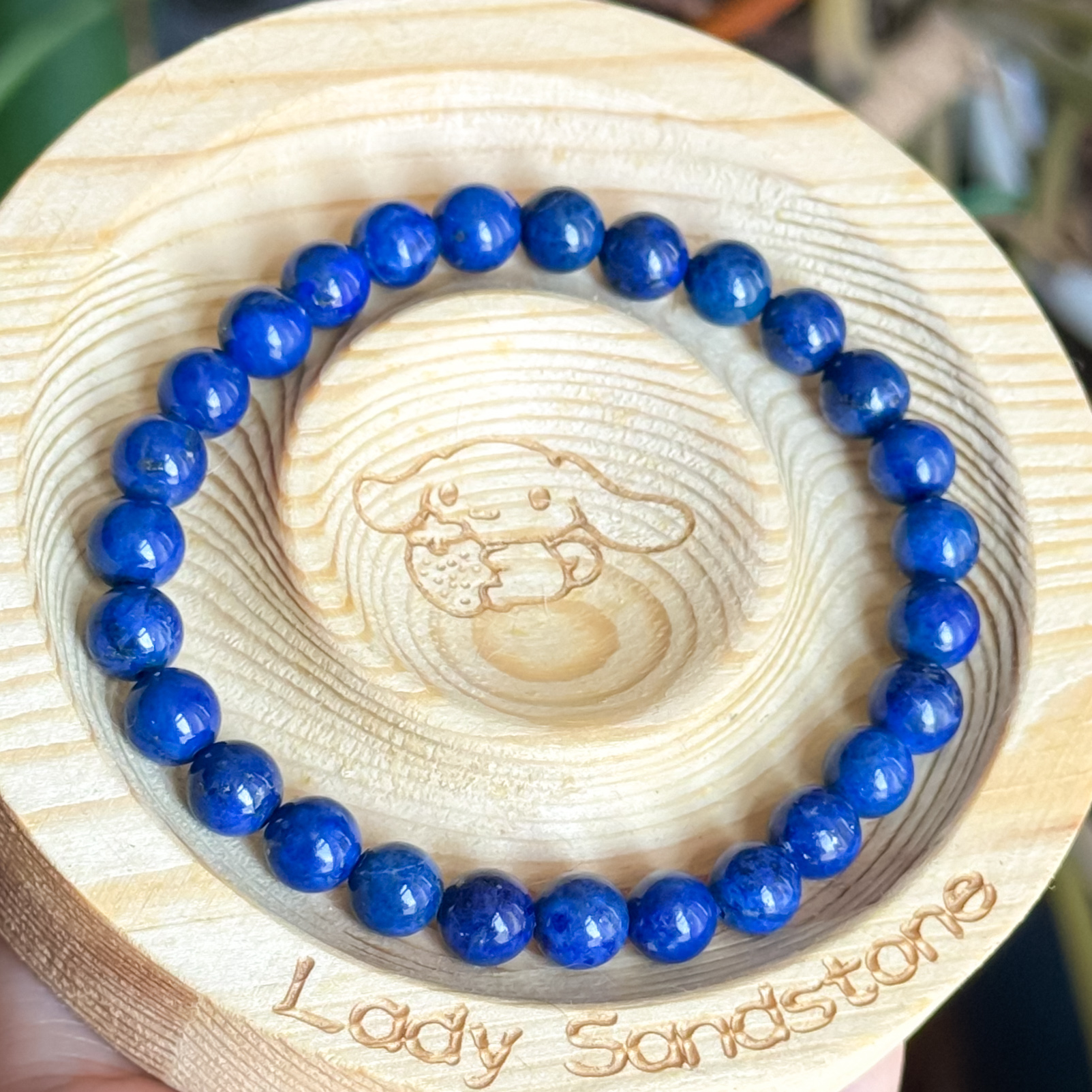
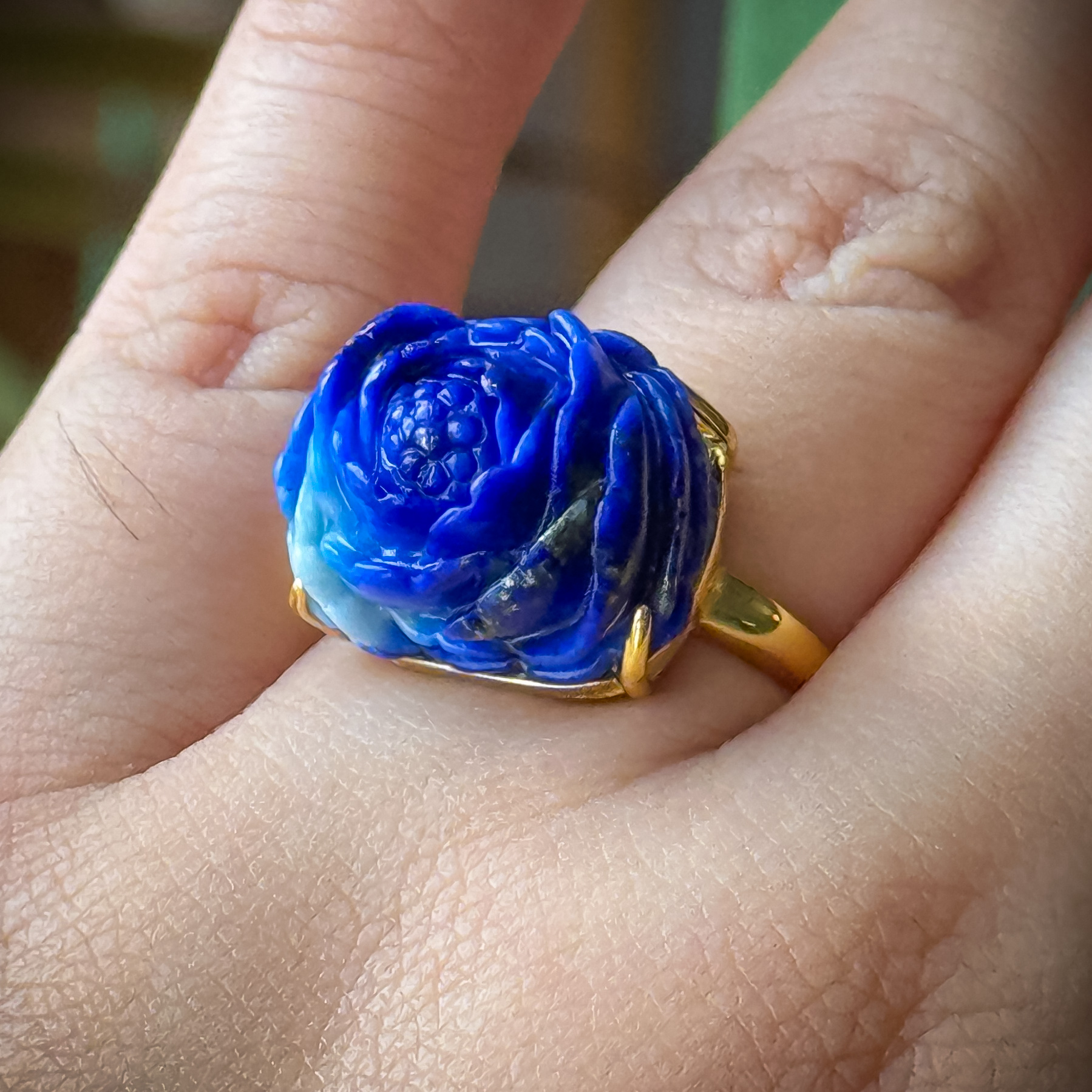
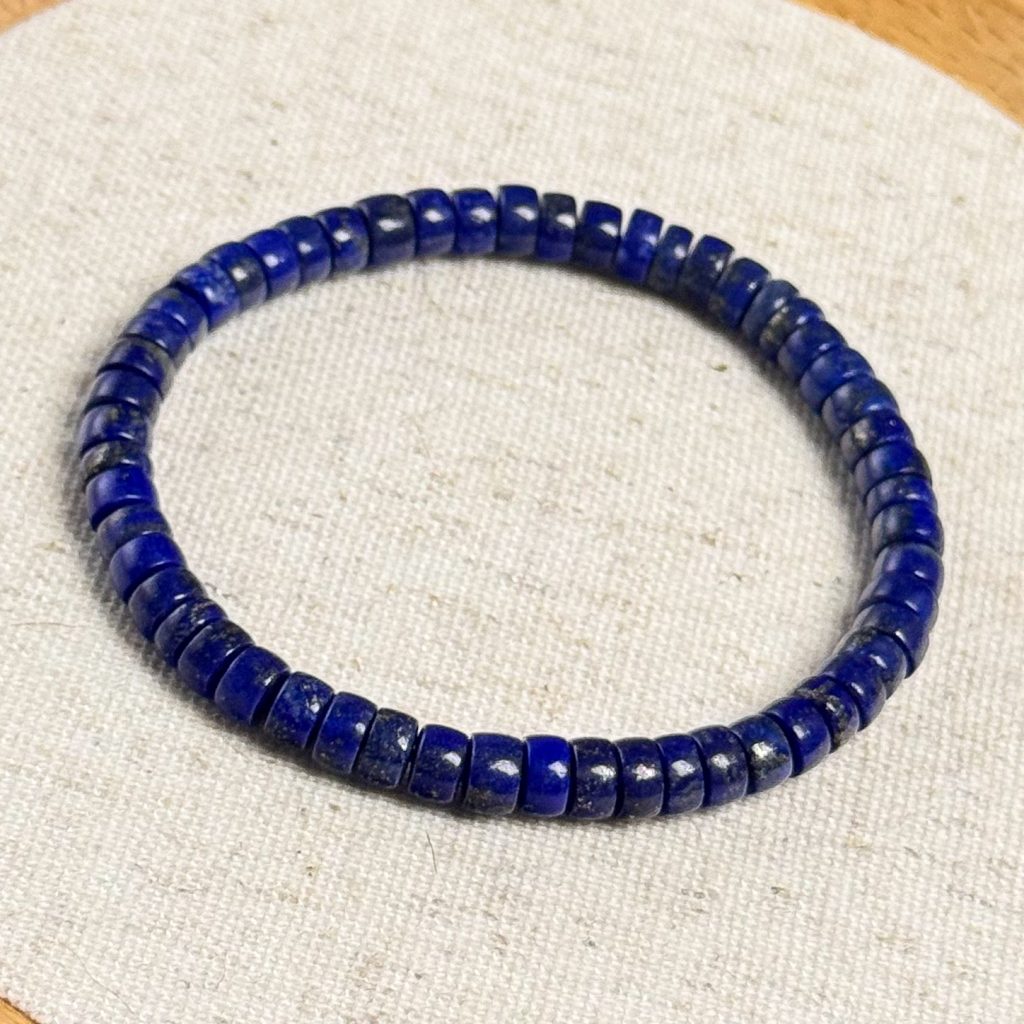
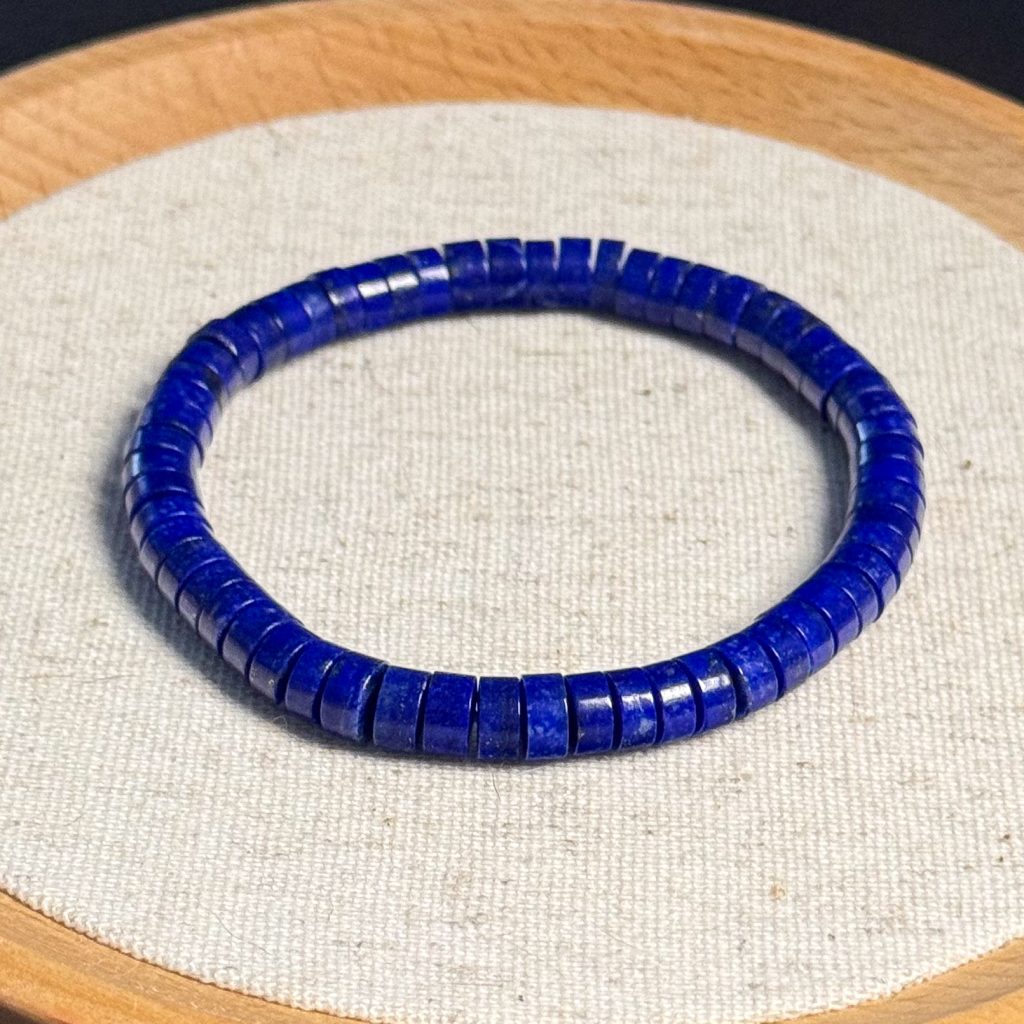
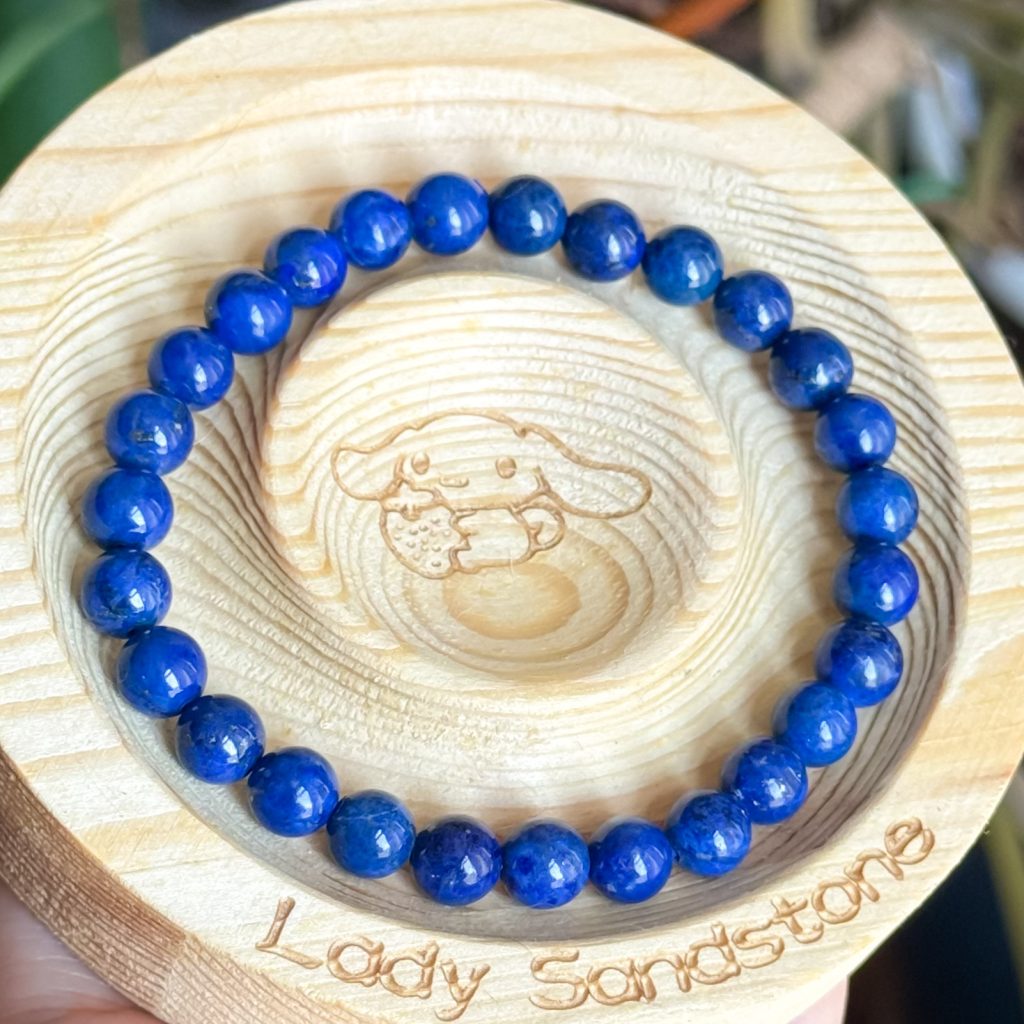
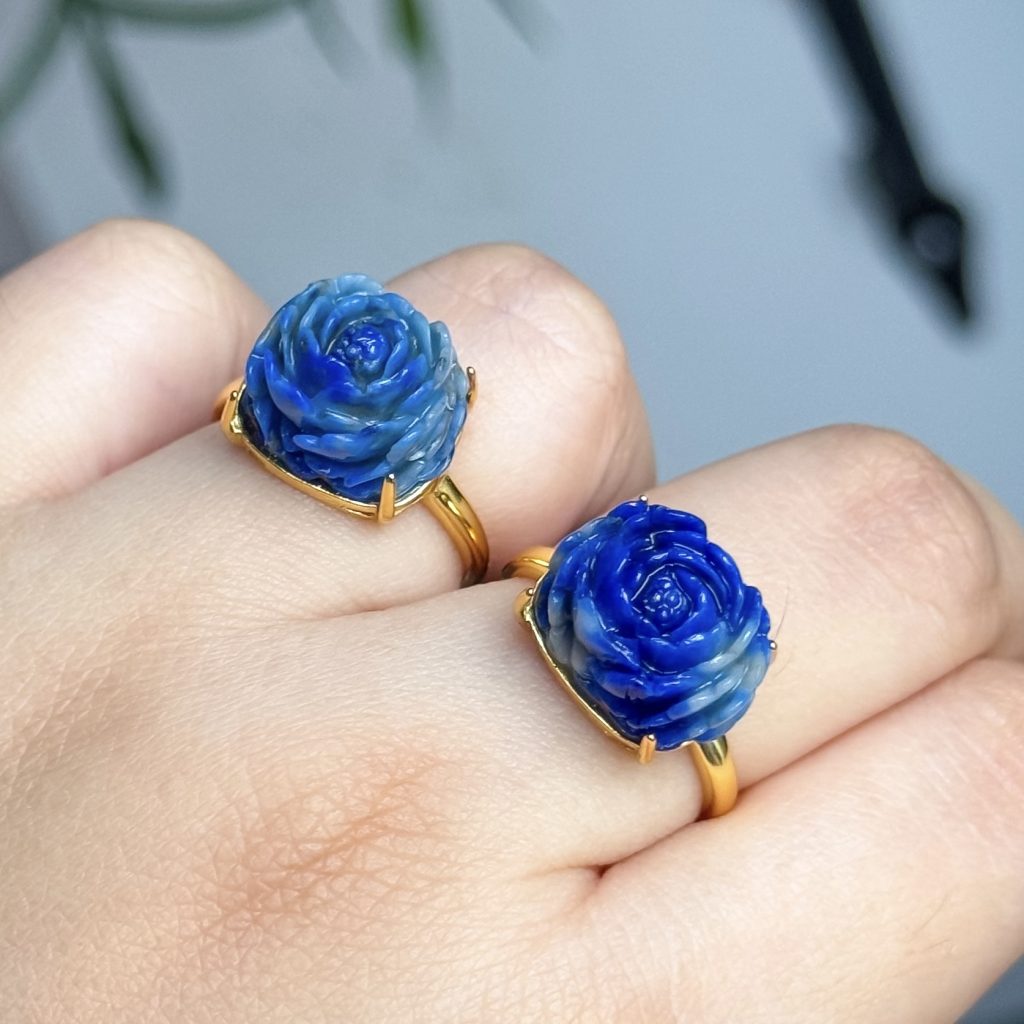
Slightly greenish-blue to violet-blue, medium-to-dark tone and highly saturated; commonly flecked with white calcite and golden pyrite |
|
Origin |
Afghanistan (Sar-e-Sang, Badakhshan — mined for 6,500+ years), Chile, Russia, Pakistan, Mongolia, Italy, USA, Canada |
|
Chakra alignment |
Third Eye (primary), Throat |
|
Metaphysical benefits |
Inner truth, wisdom, spiritual vision, honest communication |
|
Hardness (Mohs) |
5–6 |
|
Rarity |
Commonly available; top-quality deep-blue material is expensive |
|
How to spot quality |
Uniform, deeply saturated royal-blue bodycolor; minimal visible white calcite veining; small golden pyrite flecks are acceptable and prized — but excess pyrite dulls the stone to a greenish cast. Avoid dyed low-grade material (common in cheap lapis) and anything described as “reconstituted.” |
Mineralogy & Formation
- Lapis lazuli is a metamorphic rock — an aggregate of several minerals rather than a single gem species. Lazurite supplies its signature blue; calcite, pyrite, sodalite, and sometimes diopside, amphibole, feldspar, or mica appear in varying amounts.1,5,7,9
- Hardness is 5–6 on the Mohs scale, depending on the mineral mix; luster is waxy to vitreous and the stone is semitranslucent to opaque.5,9
- Signature hue is slightly greenish-blue to violet-blue, medium-to-dark in tone and highly saturated; a greenish cast indicates excess pyrite and lower quality.9
- The ancient Sar-e-Sang deposit in Badakhshan, Afghanistan — in the Hindu-Kush mountains — has supplied lapis to human civilizations for more than 6,500 years and is still producing today.10
- Other notable sources include Chile, Russia, Pakistan, Mongolia, Italy, the United States, and Canada.5,10
- The name combines Latin lapis (“stone”) with the Persian lazhuward (“blue”).1
Quality Factors (GIA)
- The finest lapis has uniform royal-blue bodycolor free of visible pyrite and calcite.9
- Prized stones may carry small gold-colored pyrite flecks — considered attractive contrast — but white calcite streaks lower value.9
- The lowest-quality lapis looks dull and greenish, the result of excess pyrite.9
- GIA evaluates lapis lazuli but does not grade it; reports identify whether material is natural or lab-grown and name any detectable treatments.9
Historic & Cultural Lore
- Treasured by ancient Mesopotamia, Egypt, China, Greece, and Rome; merchant caravans carried it across Bactria, and Marco Polo referenced the Afghan mines in 1271.10
- Historical uses extend beyond jewelry to game boards, bowls, dagger handles, hair combs, and amulets.10
- The Babylonians are believed to have mined lapis as early as 4,000 B.C., paying it as tribute to Egypt, where it was known as chesbet.8
- The Egyptian high priest wore a lapis pendant of Ma’at, goddess of truth; lapis holds its pigment when ground, enabling its legendary use as eye shadow — said to be Cleopatra’s signature.1,8
- In Mesopotamian legend, the goddess Inanna/Venus wore lapis regalia and carried a “lapis measuring rod and line” as she descended to the underworld — a myth of death, rebirth, and transformation.2
- Judy Hall identifies lapis lazuli as the stone of Archangel Michael and notes its role as a symbol of royal power “for eons.”2
- In crystal dream symbolism, Hall lists lapis lazuli as signifying “divine favour.”3
Metaphysical Properties (Traditional Claims)
- Inner truth and authenticity — Gienger’s core keyword for lapis is truth, promoting honesty, dignity, friendship, and sociability; Van Doren calls it “stop making excuses,” the stone that forces you to put down the security blanket of your stories.4,6
- Opens the third eye and spiritual vision — Perrakis recommends holding lapis to the third eye to activate psychic vision, deepen intuition, and support divination, dream work, tarot, and pendulum practice; Hall describes it as a stone of metaphysical sight and inner truth.1,2
- Royal power and confidence — Perrakis names lapis a stone of inner royalty, wisdom, knowledge, and power, embodying “the regal strength of ancient Egyptian royalty.”1
- Honest communication — when placed at the throat chakra it is said to encourage honesty and openness in communication; a standard pairing is with blue lace agate or azurite for clarity of thought.5
- Heart–mind coherence — Pearson frames lapis as uniting the mental and emotional bodies so “every action reflects the divinity programmed into the heart,” sharpening intuition and the higher mind.7
- Past-life and spirit-guide work — Perrakis recommends it for channeling past-life memories, calling in spirit guides, and moving past self-limiting beliefs.1
- Protection — Newcombe & Martin describe it as strongly protective, blocking psychic attack and helping the wearer withstand emotional bondage; works against repression, depression, and purposelessness.5
- Pain relief — Hall recommends lapis to draw off a migraine, “especially if this has a psychic cause,” placed over the third eye.3
Physical-Healing Claims in the Literature
Traditional use only — not medical advice.
- Traditionally associated with the throat, larynx, vocal cords, nerves, and brain; Gienger notes it as regulating the thyroid gland.6
- The Egyptian Ebers Papyrus recorded lapis as a cure for eye diseases and a remedy to prevent miscarriage; the Alfonso lapidary described powdered lapis taken to purge “thick humors” and melancholy.2
- Modern practitioners use it for pain relief, detoxification, lowering blood pressure, and immune support (Hall); also recommended for eyestrain headaches and insomnia.2,5
Jewelry & Care
- At Mohs 5–6 lapis is softer than quartz — suitable for earrings, pendants, and occasional-wear rings, but avoid hard knocks and abrasives.5,9
- Clean with a soft cloth and, if necessary, a brief dip in room-temperature water with very mild soap; avoid ultrasonic and steam cleaners.5
- Do not use lapis in gem elixirs taken internally — some inclusions are toxic and may react with stomach acid.5
- Van Doren notes lapis’s energy may be too intense for bedrooms and some find it too strong for everyday wear — better for altars and intentional jewelry than constant contact.4
References
- Athena Perrakis, Crystalpedia: The Wisdom, History, and Healing Power of More Than 180 Sacred Stones, “Lapis Lazuli” entry.
- Judy Hall, 101 Power Crystals: The Ultimate Guide, “Lapis Lazuli” entry.
- Judy Hall, Crystals, dream symbolism and migraine/pain sections.
- Yulia Van Doren, Crystals, “Lapis Lazuli” entry.
- Rachel Newcombe & Claudia Martin, The Complete Crystal Sourcebook, “Lapis Lazuli” entry.
- Michael Gienger, Healing Crystals: The A–Z Guide to 430 Gemstones, “Lapis Lazuli” entry.
- Nicholas Pearson, Crystal Healing for the Heart, “Lapis Lazuli” section.
- The Magic of Crystals & Gems, “Lapis Lazuli — Babylonian Blue” entry.
- Gemological Institute of America (GIA), “Lapis Lazuli Description” and “Lapis Lazuli Quality Factors.” https://www.gia.edu/lapis-lazuli-description-v1 ; https://www.gia.edu/lapis-lazuli-quality-factors
- Gemological Institute of America (GIA), “Lapis Lazuli History and Lore.” https://www.gia.edu/lapis-lazuli-history-lore