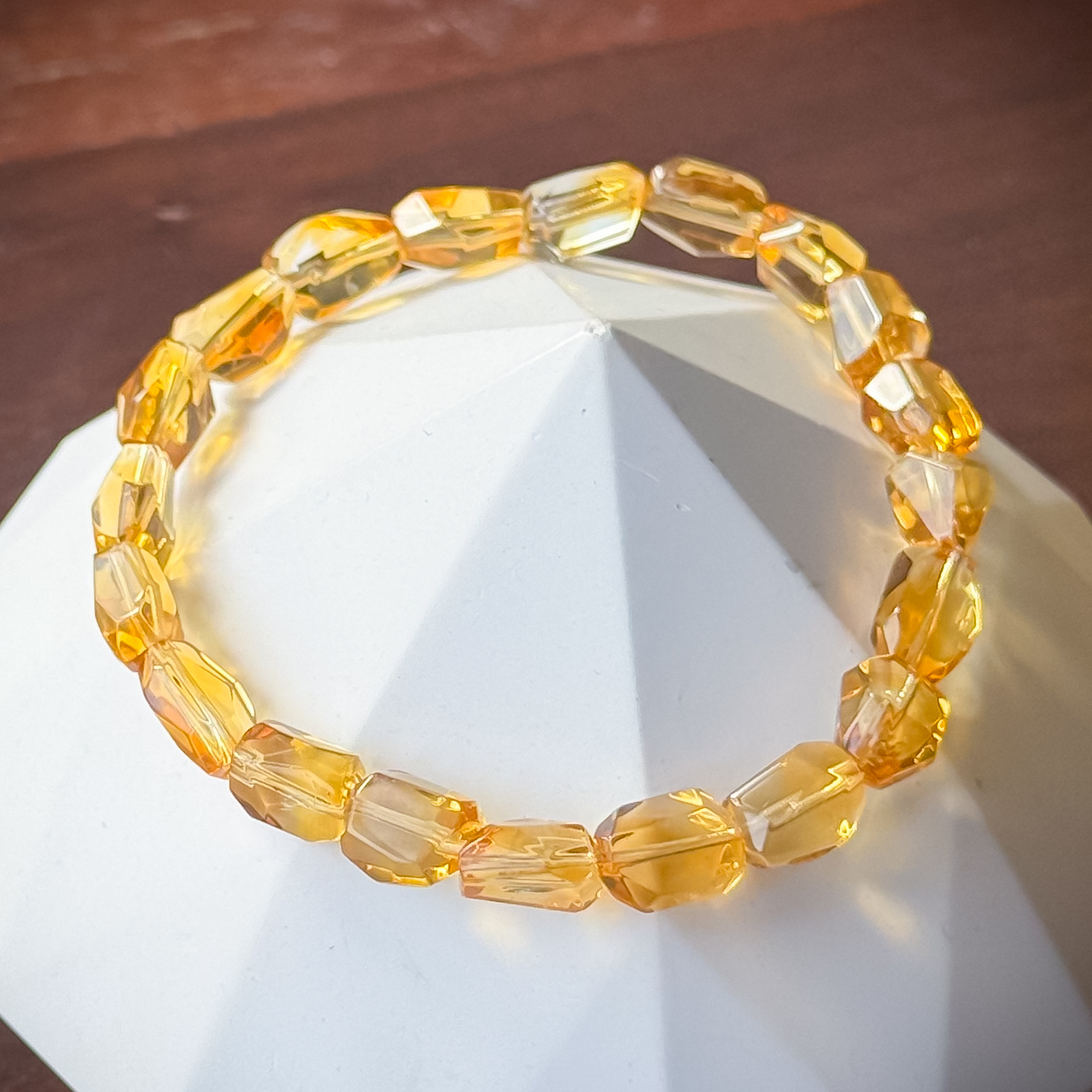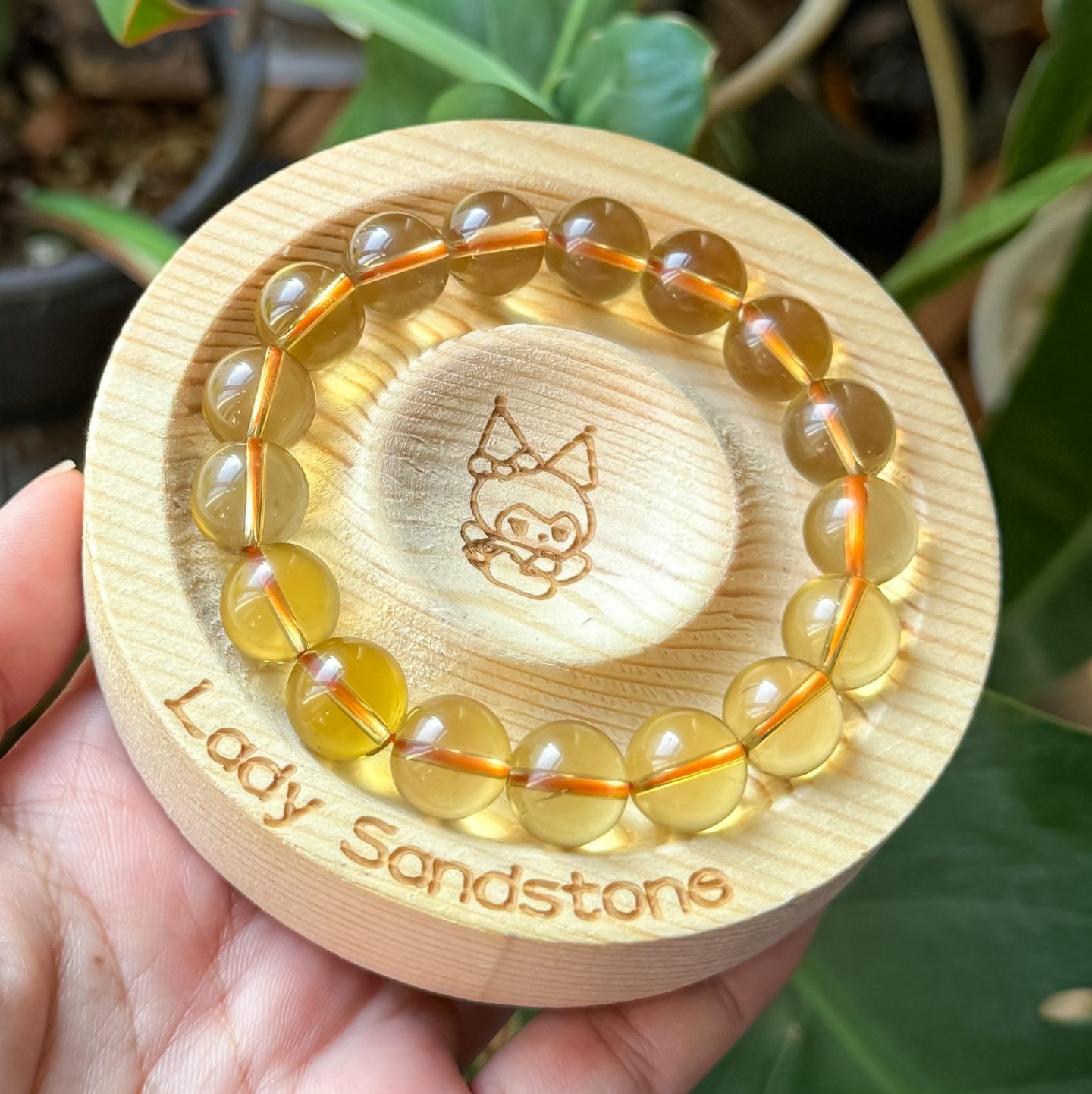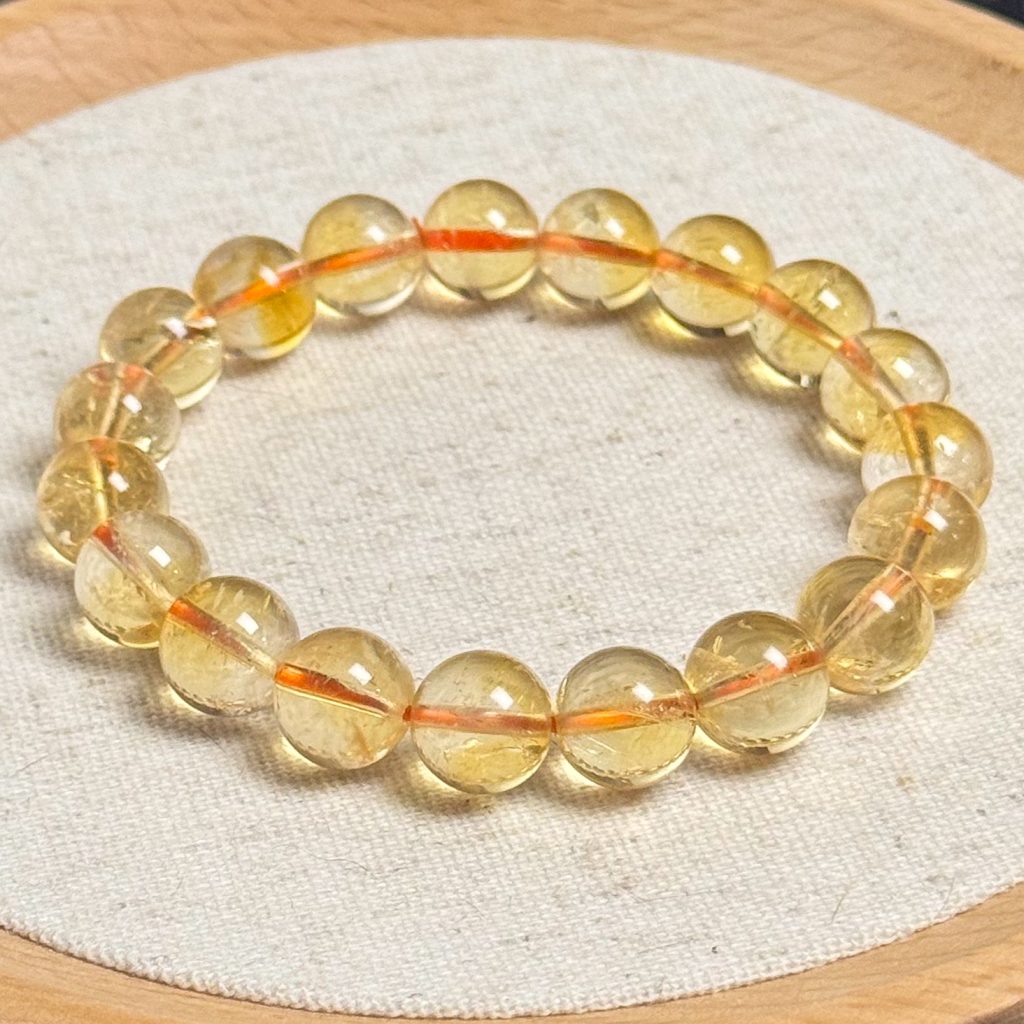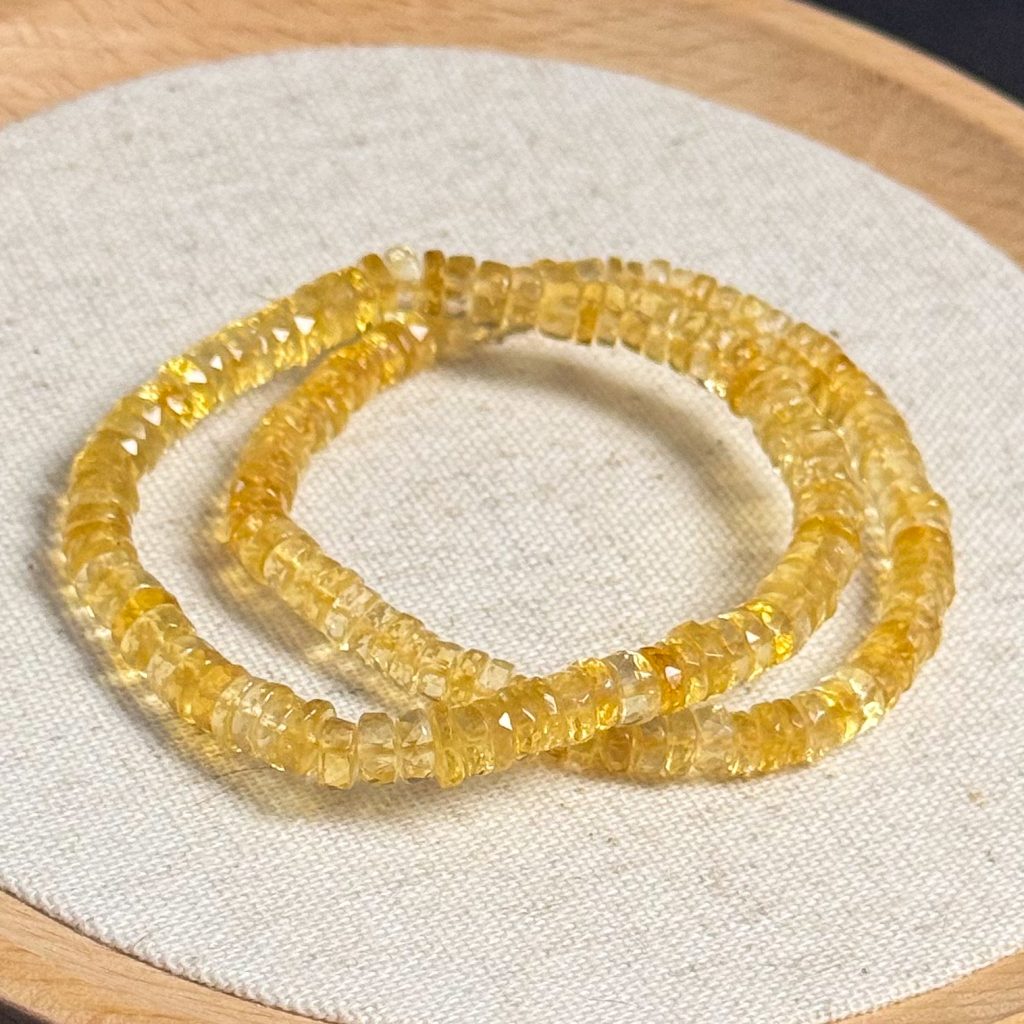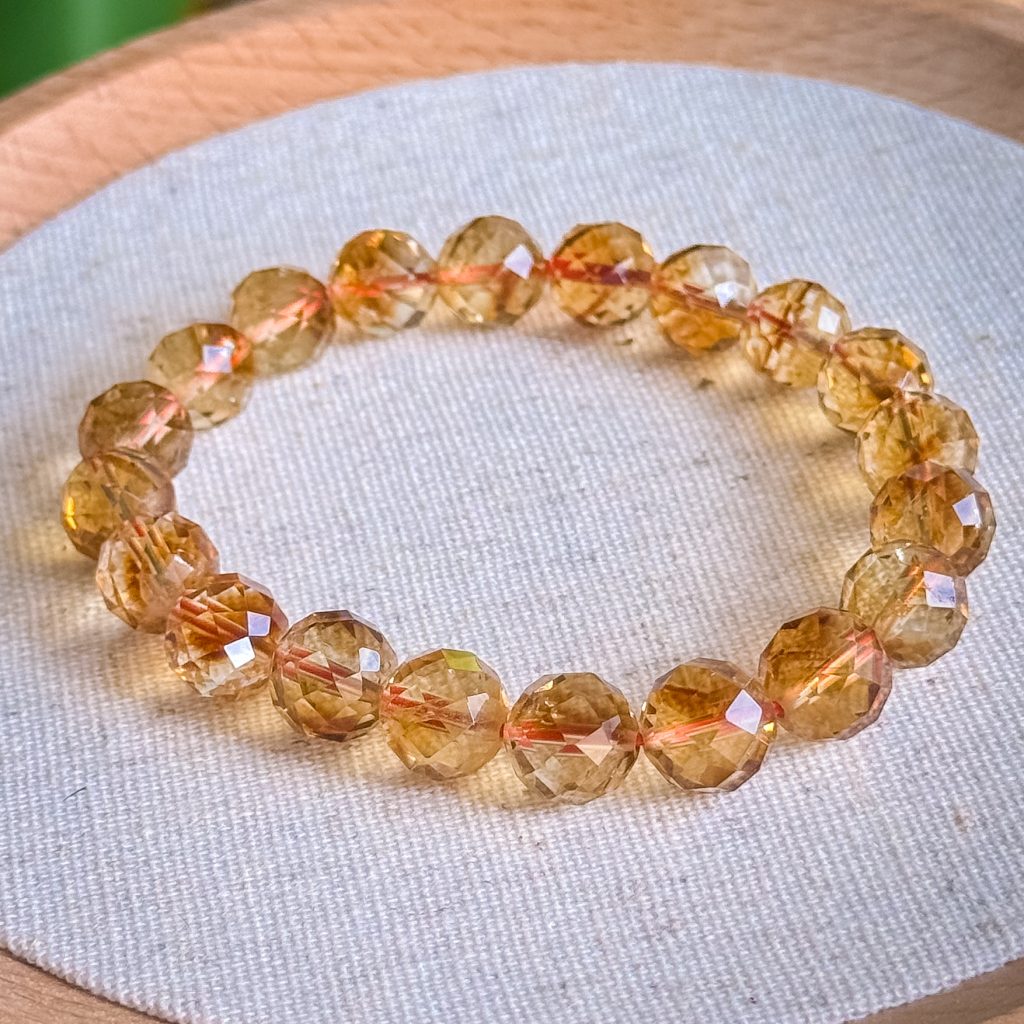
The golden quartz of abundance, confidence, and solar light
|
Mineral family |
Macrocrystalline quartz (SiO₂) — trigonal crystal system, growing as six-sided prisms capped with six-sided pyramids. The yellow-to-orange color is produced by trace amounts of iron (Fe³⁺) in the crystal structure. |
|
Color |
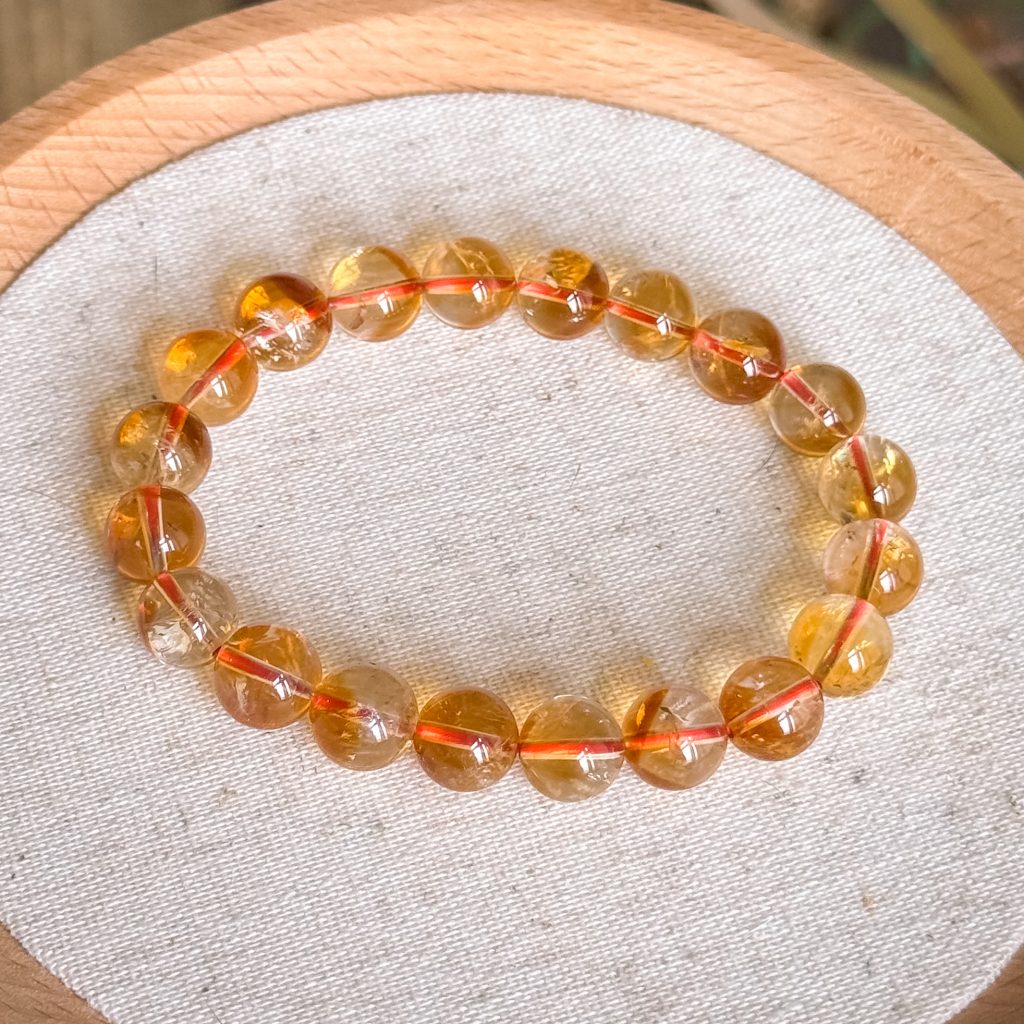
Pale lemon-yellow through deep golden, honey, whiskey, cognac, and reddish-brown (madeira). Natural stones tend to be pale champagne; heat-treated stones tend to be saturated golden to reddish-orange. |
|
Origin |
Natural citrine is rare. Sources include Brazil (principal — notably Rio Grande do Sul), Bolivia, Zambia, Madagascar, Russia (the Urals), Spain, France, the Democratic Republic of the Congo, Peru, and the United States. |
|
Chakra alignment |
Solar Plexus (primary) — also associated with the Sacral and Crown in some traditions. |
|
Metaphysical benefits |
Abundance, manifestation, confidence, joy, creativity, personal power, mental clarity |
|
Hardness (Mohs) |
7 — durable for daily-wear jewelry. |
|
Rarity |
Natural citrine is uncommon; the vast majority of commercial citrine is heat-treated amethyst or smoky quartz from Brazil. Both forms are legitimate, but should always be disclosed; natural stones command a premium. |
|
How to spot quality |
Look for eye-clean stones with lively, saturated color that is not overly brownish. The most valuable shades are saturated yellow to reddish-orange free of brown tints, though ‘madeira’ reddish-brown is highly prized in contemporary settings. A pale, smoky champagne-colored cloudy stone suggests natural origin; a vivid, transparent, near-orange stone with faint internal bands is typically heat-treated amethyst. Ask the seller whether it is natural or heat-treated. |
Mineralogy & Formation
- Citrine is a macrocrystalline variety of quartz — silicon dioxide (SiO₂) in the trigonal crystal system. It grows as six-sided prisms terminating in six-sided pyramids, and is also commonly found lining the interior of geodes as a druzy crystal cluster.5
- Citrine’s yellow-to-orange color is produced by trace amounts of iron (Fe³⁺) within the quartz lattice, distributed more finely and in a different oxidation state than the iron that produces the purple color in amethyst. Natural irradiation over geologic time can also contribute to color development.6,8
- Natural citrine is rare because most iron-bearing quartz in the earth grows purple (as amethyst) or gray-brown (as smoky quartz) rather than yellow. True natural citrine forms when amethyst-producing fluids are exposed to sustained elevated temperatures underground, converting the iron to its yellow-producing state — essentially, a natural version of the same transformation jewelers do in the lab.5,6
- Hardness is 7 on the Mohs scale, with good toughness — durable enough for all jewelry types, including rings.5,11
- The name derives from the Latin citrus (via French citron), meaning ‘lemon,’ referring to the stone’s yellow color.1,10
Natural vs. Heat-Treated Citrine
This is the single most important thing to understand when buying citrine.
- Most citrine on the market is heat-treated amethyst or smoky quartz. Heating to roughly 470–750 °C converts iron-bearing purple or gray quartz to stable yellow, orange, or reddish-brown. The treatment is permanent and industry-accepted, but should always be disclosed.8,9
- Newcombe & Martin: ‘Natural citrines are rare, with most specimens sourced from southern Brazil. Many citrines on the market are artificially heat-treated amethysts.’ They note the visual tell: ‘A natural citrine has a cloudy appearance, while a heat-treated amethyst or smoky quartz may display faint internal lines.’5
- Van Doren puts it bluntly: ‘The fiery orange Citrine most know and love is actually Amethyst that has been heated at high temperatures to transform it from purple to orange. Citrine does occur naturally in the earth’s crust, but natural specimens are uncommon, expensive, and often a dull, opaque yellow-brown. Both heat-treated and natural Citrine hold strong magic — try to get your hands on both to feel the energy differences between them.’3
- Grayson warns that ‘good-quality natural citrine is uncommon, so much of the material available on the market is heated to give it a saturated color,’ and separately notes that some dealers have historically misrepresented citrine as topaz — a pattern that goes back to before modern gemology.6,10
- Visual clues: natural citrine tends toward a pale, smoky, champagne-yellow with a slightly cloudy look. Heat-treated stones tend toward a saturated golden, orange, or reddish-orange — often vivid and highly transparent, sometimes with faint parallel internal lines or a reddish tint near the cut edges. Heat-treated stones in ‘madeira’ or ‘cognac’ colors are intentional color grades, not defects.5,8
Color Range & Varieties
- Citrine ranges from pale lemon-yellow through deep golden, honey, and reddish-brown. Commercial color grades commonly used by jewelers include ‘lemon citrine’ (pale yellow), ‘golden citrine’ (medium saturated gold), ‘madeira citrine’ (deep reddish-brown), and ‘cognac’ or ‘whiskey’ citrine (warm amber tones).5,6,8
- Natural citrine is typically a pale champagne or smoky yellow. The saturated oranges and deep madeira browns most buyers picture are almost always heat-treated.5,6
- Ametrine is a related gem — a single stone showing both amethyst (purple) and citrine (yellow) zones, produced when the two grew together in the same crystal. It is mined almost exclusively at the Anahí Mine in Bolivia.3,8
- Prasiolite (green quartz) is sometimes marketed alongside citrine; it is produced by heat-treating certain amethysts at a different temperature and chemistry. Like heat-treated citrine, it is stable and legitimate but should be disclosed.8
Historic & Cultural Lore
- Citrine has been used in jewelry for thousands of years. Grayson records that ‘it was used as a decorative gem during the Hellenistic period in ancient Greece, and some biblical scholars believe citrine is the tenth of twelve stones in Aaron’s breastplate in the Book of Exodus.’6
- GIA confirms citrine appears in Roman jewelry, and notes that in the days before modern gemology its tawny color caused it to be confused with topaz — an error that may explain some ancient ‘topaz’ references that likely refer to citrine.10
- Perrakis records that citrine ‘was worn as a talisman to protect the bearer from the evil thoughts of others and bring financial prosperity,’ establishing its long-running association with wealth, protection, and social success.1
- The common nickname ‘merchant’s stone’ or ‘money stone’ comes from the tradition — recorded by Newcombe & Martin and many crystal writers — of placing citrine in cash registers, safes, or wallets to attract and hold wealth.5
- Citrine was particularly popular in colorful Scottish jewelry from the Victorian era, often used in cairngorm brooches, kilt pins, and dirk handles. It also featured prominently in Victorian and Art Deco jewelry worldwide, where it appeared in large pendants, brooches, and cocktail rings.6,10
- Citrine is the modern November birthstone (shared with topaz) and is traditionally given for the 13th wedding anniversary.10
Quality Factors (GIA)
- GIA evaluates citrine on color, clarity, and cut. Color is the dominant value driver: ‘a saturated yellow to reddish orange color free of brownish tints is prized in citrine,’ though in the contemporary market, citrine’s most popular shade is an earthy deep brownish or reddish orange.9
- Clarity: dealers look for citrines without color zoning or visible inclusions. Most faceted citrine on the market is eye-clean (no eye-visible inclusions).9
- Cut: citrine is available in standard shapes and sizes — rounds, ovals, cushions, emerald cuts — and, because it is affordable and available in large clean pieces, high-end designers and carvers also fashion citrine into fantasy cuts, large statement centers, and carved objets.9
- Treatment disclosure: GIA treats heat treatment as routine and stable for citrine, but the fact of heating should always be disclosed under industry practice (FTC Guides and similar frameworks in other jurisdictions).8,9
Metaphysical Properties (Traditional Claims)
- Solar Plexus chakra and personal power — Perrakis: ‘Citrine brings healing to the Solar Plexus Chakra, and placed on this energy center, it restores your self-esteem and confidence. It helps you to recognize the special attributes that make you unique. Citrine increases mental clarity and enhances your sense of empowerment, creativity, motivation, and self-expression.’1
- Courage and amplification — Van Doren: ‘Citrine is a stone that amplifies, and its golden yellow color vibrates at the frequency of the solar plexus chakra. Therefore, it is a powerful stone of courage.’3
- Abundance and manifestation — Grayson: ‘Citrine is a success and prosperity crystal. It combats negative energy and paves the way for growth. Use citrine to manifest abundance, both physically and spiritually. Carry a citrine crystal in your wallet or purse to attract money or curb overspending, or incorporate citrine while meditating on your goals to achieve abundance in the broader sense.’6
- Joy and motivation — The Magic of Crystals & Gems: ‘Citrine is quite simply an essential to have; it promotes calmness and brings out a feeling of well-being and happiness. Citrine makes anyone want to be more active and is a strong motivator.’7
- Because it is a form of quartz, Perrakis recommends citrine as the centerpiece for any crystal grid with the intention of attracting financial prosperity, leveraging quartz’s general role as an energy amplifier.1
- Citrine is one of the few stones that many writers — including Hall and Perrakis — describe as self-cleansing: said not to accumulate or hold negative energy, and therefore not needing to be cleared between uses. Useful for practitioners who want a low-maintenance stone for daily carry.1,2
Physical-Healing Claims in the Literature
Traditional use only — not medical advice.
- Digestion, circulation, and metabolism — Grayson: ‘This crystal aids in digestion, stimulates circulation, and regulates the metabolism. It also relieves depression, anger, and mood swings. Citrine is also helpful in removing toxins, which is why it is often used in overcoming addictions.’ Common placement is skin contact at the fingers or throat.6
- Releasing stored tension — Silbey frames citrine as working through relaxation: ‘Citrine begins its healing process by relaxing the tension that holds old patterns in place… On a physical level, we might experience this as a release of tension in the joints and muscles or healthier, more regular digestion and elimination.’8
- Anxiety and eating — Newcombe & Martin recommend placing citrine on the solar plexus chakra to ‘dispel anxiety that is causing difficulties with eating,’ and more generally credit it with helping concentration and clearing the mind, easing self-doubt, confusion, anxiety, and phobias.5
- Circulation and skin — Newcombe & Martin also note that placing a citrine crystal on the solar plexus or sacral chakras is said to support circulation and encourage the elimination of cellulite. All of these claims are metaphysical tradition, not clinical medicine.5
Jewelry & Care
- At Mohs 7 with good toughness, citrine is durable enough for all jewelry types, including rings for daily wear. This, plus its affordability and abundance in large clean sizes, is why it is one of the most popular yellow gems in fine jewelry.5,11
- Color fading is the main long-term risk. GIA notes citrine’s color ‘can fade with prolonged exposure to intense light.’ Don’t store citrine rings and pendants in direct sunlight — a drawer or pouch is better than a sunny windowsill.11
- Avoid heat and sudden temperature changes. GIA warns that ‘abrupt temperature changes can cause citrine to fracture’ and specifically recommends against steam cleaning.11
- Cleaning: warm soapy water with a soft cloth is safe. Ultrasonic cleaners are usually safe except where a stone has been dyed or fracture-filled (rare for citrine). When in doubt, stick with warm water.5,11
- Safety note: Newcombe & Martin warn not to inhale citrine dust during carving or grinding — like all quartz, fine silica dust can cause silicosis with prolonged exposure. This is only a concern for lapidaries, not wearers.5
References
- Athena Perrakis, Crystalpedia: The Wisdom, History, and Healing Power of More Than 180 Sacred Stones, ‘Citrine’ entry.
- Judy Hall, 101 Power Crystals: The Ultimate Guide, ‘Citrine’ entry.
- Yulia Van Doren, Crystals, ‘Citrine’ entry.
- Nicholas Pearson, Crystal Healing for the Heart, citrine references.
- Rachel Newcombe & Claudia Martin, The Complete Crystal Sourcebook, ‘Citrine’ entries.
- Lisa Grayson, Crystals: The Ultimate Beginner’s Guide to Crystals and Their Uses, ‘Citrine’ chapter.
- The Magic of Crystals & Gems, ‘Citrine’ entry.
- Uma Silbey, Emotional Healing with Crystals and Stones, ‘Citrine’ section.
- Gemological Institute of America (GIA), ‘Citrine Quality Factors.’ https://www.gia.edu/citrine-quality-factors
- Gemological Institute of America (GIA), ‘Citrine History and Lore.’ https://www.gia.edu/citrine-history-lore
- Gemological Institute of America (GIA), ‘Citrine Care and Cleaning.’ https://www.gia.edu/citrine-care-cleaning